The phenomenon of a music group disbanding is not new, but in the highly interconnected, emotionally driven world of modern pop culture—especially within the K-pop industry—an artist’s contract termination or a group’s disbandment triggers a psychological response that goes far beyond simple disappointment. When fans invest years of their lives streaming music, voting in award shows, buying merchandise, and emotionally attaching themselves to a group’s narrative, the sudden end of that entity feels like a personal tragedy. This profound sense of loss is increasingly being recognized by psychologists and sociologists as “parasocial grief.” It is a genuine, deep-seated emotional response to the severing of a one-sided, yet intensely felt, relationship between the fan and the artist, often leaving the fandom in a state of collective mourning.
However, the music industry is inherently a business, and entertainment agencies have quickly learned that even the end of a group can be transformed into a highly profitable venture. The emotional vulnerability of fans during a disbandment has given rise to a sophisticated strategy known as “archiving marketing.” By curating final albums, commemorative photobooks, farewell exhibitions, and retrospective merchandise, agencies provide fans with tangible ways to hold onto their memories while simultaneously generating significant revenue. This intersection of genuine human sorrow and calculated commercial strategy creates a complex dynamic that redefines how we understand consumer behavior at the end of an artist’s lifecycle. We are no longer just looking at a group breaking up; we are witnessing the monetization of closure.
Understanding Parasocial Grief in Modern Fandoms
To comprehend the sheer scale of emotion that follows a group’s disbandment, we must first understand the depth of modern parasocial relationships. Fandom is no longer a passive hobby; it is a lifestyle, a daily routine, and a core component of a fan’s identity.
The Psychology Behind Fan Depression
When we talk about “fan depression” or parasocial grief, we are not speaking metaphorically. Fans build their daily routines around their favorite idols. They wake up to messages on platforms like Weverse or Bubble, spend their commutes listening to the group’s discography, and end their days watching variety shows or live streams. The idols become constant, comforting companions in the fan’s life.
When a contract is terminated or a group disbands, that daily routine is violently shattered. The psychological impact mirrors the loss of a real-life friend or the end of a significant romantic relationship. Fans experience the classic stages of grief: denial (believing it’s a rumor or a negotiation tactic), anger (directing frustration at the agency or departing members), bargaining (signing petitions to keep the group together), depression (a profound sense of emptiness), and eventually, acceptance. The pain is exacerbated by the fact that society at large often invalidates this grief, dismissing it as “just a celebrity crush” or immature obsession, which leaves fans feeling isolated in their sorrow.
The Impact of Sudden Contract Terminations
Not all disbandments are created equal. A planned disbandment, where a group announces their farewell months in advance, allows fans time to process the end and say goodbye properly. However, sudden contract terminations—often due to internal conflicts, scandals, or abrupt agency decisions—inflict a much sharper trauma. In these instances, the narrative is abruptly cut off. There is no final concert, no farewell song, and no closure. This sudden severance can lead to a prolonged state of parasocial grief, as fans are left with unresolved emotional investments and unanswered questions. The community fractures, and the shared joy that once defined the fandom is replaced by confusion and collective heartbreak.
The Business of Goodbyes: What is Archiving Marketing?
Where there is strong consumer emotion, there is an opportunity for commerce. The entertainment industry has adeptly identified that the period immediately preceding and following a disbandment is a time of heightened vulnerability, but also a time of peak purchasing motivation. Enter “archiving marketing.”
Packaging History for the Grieving Fan
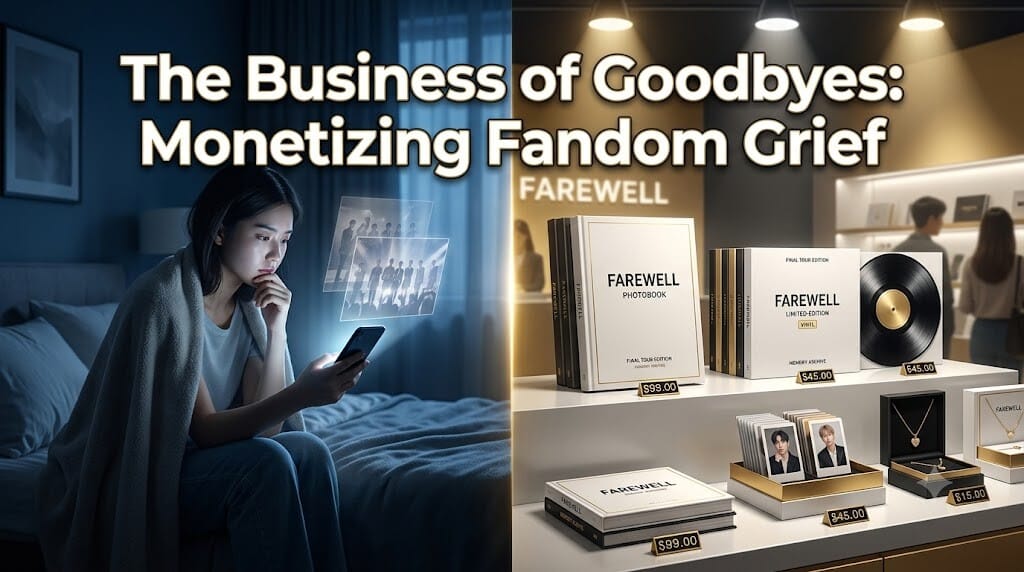
Archiving marketing is the practice of compiling, curating, and selling the history of a group as a final product. It is the commercialization of nostalgia. Agencies will release “Best Of” compilation albums featuring a few previously unreleased tracks to ensure high sales. They will produce massive, premium-priced photobooks detailing the group’s journey from debut to disbandment. Behind-the-scenes DVDs, unreleased concert footage, and special farewell merchandise are rapidly pushed to the market.
The messaging behind these products is carefully crafted to tug at the heartstrings. It is no longer about supporting a group’s future chart performance; it is about preserving their legacy. Agencies position these products as the definitive, physical proof that the group existed and that the fan’s love was real. In a digital age where social media accounts can be deleted and content wiped from servers, physical archiving merchandise offers a tangible anchor for the fan’s memories.
The Economics of Fandom Mourning
The financial logic behind archiving marketing is astonishingly effective. When a group is active, a fan might skip buying a particular piece of merchandise, assuming there will be another comeback, another tour, and another photobook in six months. Disbandment introduces the ultimate psychological trigger: scarcity.
This is the fan’s last chance to buy official merchandise. The Fear Of Missing Out (FOMO) combines powerfully with the desire to find emotional closure. Consequently, farewell albums and final merchandise drops often see explosive sales figures, sometimes surpassing the group’s peak active years. Fans are willing to spend significant amounts of money because they are not just buying a CD or a poster; they are purchasing a piece of closure. They are paying to solidify their emotional investment into a permanent, physical archive.
Ethical Implications: Healing or Exploitation?
The rise of archiving marketing has sparked intense debate within fandom communities and among cultural critics. The core question remains: is this a necessary service providing closure, or a cynical exploitation of fan depression?
The Fine Line Between Tribute and Cash Grab
On one hand, fans genuinely want these final pieces of media. A beautifully produced final album or a farewell exhibition allows the fandom to gather, celebrate the group’s legacy, and mourn together. It provides a structured environment for the parasocial grief to be processed. For many, holding a final photobook brings a sense of peace and a fitting end to a long journey.
On the other hand, the pricing and aggressive marketing of these final products can feel predatory. Agencies know that grieving fans are highly irrational consumers. Releasing multiple versions of a “farewell album” or charging exorbitant entry fees for a final pop-up store can leave fans feeling manipulated. When an agency that notoriously mismanaged a group suddenly profits immensely from their disbandment, the archiving marketing strategy feels less like a heartfelt tribute and more like a final, calculated cash extraction before the intellectual property is retired.
Coping Mechanisms and Fandom Resilience
Despite the emotional toll of disbandment and the commercial pressures of archiving marketing, fandoms have proven to be incredibly resilient. The ways in which fans process parasocial grief highlight the strength of these digital communities.
Fan-Led Archiving and Digital Memorials
While agencies sell official archives, fans take it upon themselves to create comprehensive, free digital archives. Recognizing that corporate entities may erase a group’s digital footprint (such as deleting official YouTube channels or social media profiles), fans organize massive archiving projects. They download and categorize thousands of videos, interviews, and photos, storing them on independent servers or decentralized platforms. These fan-led archives serve as digital memorials, built on pure love rather than profit motives. It is a collective effort to ensure that the group’s cultural impact is not erased by corporate mandates.
Shifting Support to Solo Endeavors
Another crucial step in overcoming fan depression is the transition of support. A group may disband, but the individual artists often remain in the industry, pursuing solo music careers, acting, or content creation. Fans transfer their protective instincts and emotional investment to these solo endeavors. While the dynamic changes—it is no longer about the synergy of the group, but the survival of the individual—this continuation provides a lifeline for the fan’s emotional attachment. Supporting a former member’s solo debut becomes a therapeutic way to keep the connection alive while acknowledging that the past era has definitively ended.
The Future of Fandom Endings
As the global music industry continues to evolve, the lifecycle of an artist is becoming more structured, and the emotional management of fandoms is becoming a specialized field. Parasocial grief is no longer an ignored side-effect of the entertainment business; it is a recognized phase of the consumer journey.
In the future, we may see agencies taking a more holistic approach to disbandments, offering digital counseling resources or focusing on legacy preservation that feels more respectful and less purely transactional. Until then, the intersection of heartbreak and commerce will remain a defining characteristic of modern fandom. The end of a group will always bring tears, but it will also bring a carefully curated merchandise link, proving that in the world of pop culture, even goodbyes come with a price tag.
Writer’s Opinion
Wait, is it just me, or does this whole ‘buying merch to cure a broken heart’ thing feel totally surreal when you actually stop and think about it? I mean… we pour years of our lives, our energy, and our genuine love into these groups, and when it all falls apart, we’re basically handed a $50 farewell photobook to dry our tears with, right?! It’s honestly wild how our deepest, most authentic heartbreak is just perfectly packaged into a final checkout cart. But then again, maybe we need that physical thing to hold onto when the daily Weverse notifications stop coming—like a heavy anchor in a sea of disappearing digital memories. Still, doesn’t it make you wonder if these companies are just a little too brilliant at weaponizing our emotional vulnerabilities? What a strange, beautiful, and slightly dystopian world K-pop fandom really is!