The explosive global rise of K-pop over the past decade is nothing short of a cultural miracle. What was once a localized music industry in South Korea has evolved into a multi-billion-dollar global powerhouse, capturing the hearts of millions across North America, Europe, Latin America, and Southeast Asia. With this unprecedented expansion, the demographics of K-pop consumers have radically shifted. The fandom is no longer a homogenous group of domestic listeners; it is a vibrant, incredibly diverse global community representing a multitude of races, ethnicities, and cultural backgrounds. However, this beautiful globalization has also brought forth a recurring, painful friction point. As K-pop aggressively incorporates various global music genres, fashion trends, and visual aesthetics into its highly produced concepts, it repeatedly collides with the sensitive boundaries of marginalized cultures.
The result is a seemingly endless cycle of controversies surrounding “Cultural Appropriation” (CA) within the global K-pop fandom. From idols wearing box braids and dreadlocks for a “hip-hop” concept, to music videos featuring sacred religious symbols as mere background props, or styling choices that mimic traditional indigenous garments, the industry has repeatedly found itself in hot water. For the international fans whose cultures are being utilized, these actions are deeply offensive and alienating. Yet, from the perspective of the South Korean entertainment agencies, these choices are often made without malicious intent, viewed simply as paying “homage” or adopting a “cool global trend.” This massive disconnect in cultural understanding has transformed social media platforms into battlegrounds, where fans desperately try to educate their favorite artists, while agencies scramble to issue reactionary apologies. Understanding why these cultural appropriation controversies continuously erupt and how K-pop agencies must fundamentally change their approach is essential for the sustainable future of the industry.
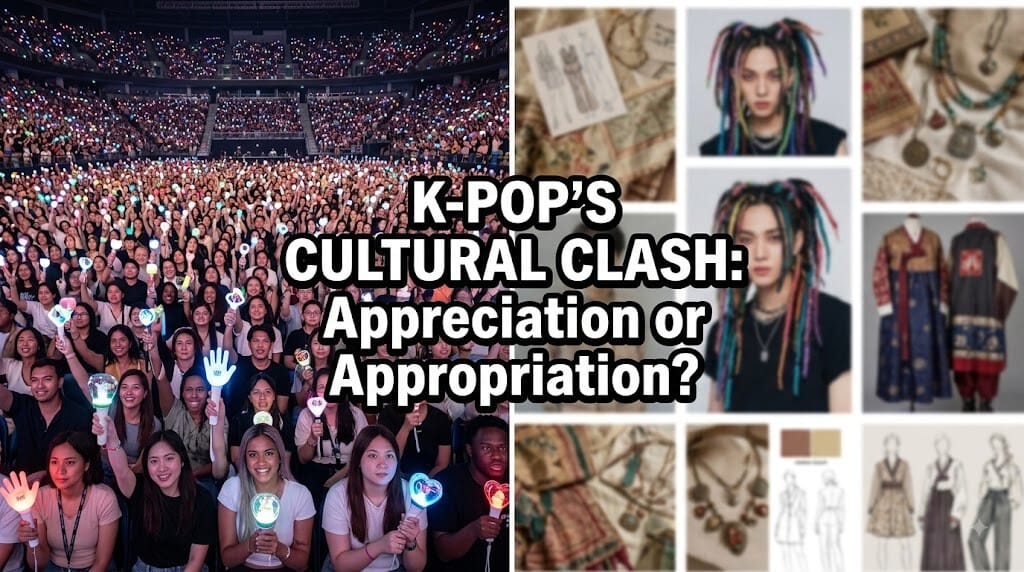
Understanding Cultural Appropriation in the K-Pop Context
What is Cultural Appropriation?
To comprehend the friction within the global fandom, we must first clearly define what cultural appropriation entails, especially how it differs from cultural appreciation. Cultural appropriation occurs when members of a dominant culture adopt elements of a minority or marginalized culture, often stripping those elements of their original meaning, sacredness, or historical context, and using them for aesthetic, financial, or entertainment purposes. In the context of K-pop, this usually manifests visually and sonically. It is the act of treating a deeply rooted cultural identity as a temporary “concept” or a “costume” that an idol can wear for a three-week promotional cycle and then discard. Cultural appreciation, on the other hand, involves a mutual exchange characterized by respect, deep understanding, and permission, often involving creators from that specific culture in the creative process.
Why K-Pop is Highly Susceptible
The K-pop industry is uniquely susceptible to cultural appropriation controversies due to its fundamental business model. K-pop is built on the concept of constant reinvention. With every “comeback” (a new album release), groups are expected to present a completely new visual and sonic concept to keep the audience engaged. In their relentless search for fresh, striking visuals and trendy sounds, art directors and stylists act like magpies, picking shiny elements from various global subcultures to create a unique pastiche. Furthermore, K-pop is heavily rooted in Black American music traditions—R&B, hip-hop, and trap are the foundational sounds of modern Korean pop. In an attempt to project an “authentic” or “tough” image that matches the hip-hop sound, agencies frequently adopt Black hairstyles, vernacular, and fashion without fully grasping the systemic racism and historical struggles attached to those cultural markers.
The Root Causes of Endless Controversies
The Disconnect Between Domestic and Global Sensibilities
One of the primary reasons these controversies happen repeatedly is the fundamental difference in cultural landscapes. South Korea is historically one of the most ethnically and culturally homogenous societies in the world. Until recently, the everyday exposure to diverse races and cultures was quite limited for the average Korean citizen. In a homogenous society, the concept of cultural appropriation is often difficult to grasp because there is no immediate domestic context of a dominant racial group oppressing a minority group based on their cultural expressions. When a Korean stylist sees a Native American war bonnet or a South Asian bindi, they do not inherently connect it to a history of colonization or religious significance; they merely see an exotic, visually appealing accessory that fits a “bohemian” or “mystical” music video concept.
“Concept” Over Context: The Aesthetic Trap
The K-pop production machine operates on strict deadlines and a strong hierarchy, often prioritizing the final aesthetic over the cultural context of the elements being used. When a creative board decides on a “street” concept, the mood boards are immediately filled with references to specific cultural markers. The problem lies in the superficiality of this process. There is rarely a moment where the production team stops to ask, “What does this hairstyle mean to the people who wear it naturally?” or “Is this pattern sacred to a specific indigenous group?” The industry treats global cultures as a buffet of free aesthetic choices. This “concept over context” mentality means that cultural elements are flattened into mere props. Until the internal culture of these agencies shifts to prioritize context alongside aesthetics, the cycle of unintentional offense will continue to repeat itself with every new album cycle.
The Impact of Cultural Appropriation on Global Fandoms
Fandom Division and Emotional Labor
When a cultural appropriation controversy breaks out, the immediate impact is a severe fracturing of the fandom. Global fans, particularly Black, Brown, and Indigenous fans, find themselves in an incredibly painful position. They are forced to confront the fact that the industry they invest their time, money, and love into does not respect or understand their identities. This leads to immense emotional labor. These fans take to platforms like Twitter (X) and Reddit, organizing mass email campaigns, trending hashtags, and writing extensive, translated educational threads trying to explain to the agency and domestic fans why a certain styling choice is offensive. Unfortunately, this often leads to toxic infighting. Domestic fans or international fans from different backgrounds might defend the idol, dismissing the marginalized fans as being “too sensitive” or “bringing Western politics into K-pop.” This internal warfare creates a highly toxic environment that ruins the escapist joy that K-pop is supposed to provide.
Financial and Reputational Damage to Agencies
Beyond the emotional toll on the fans, these controversies have tangible business consequences for the entertainment agencies. In the current digital age, K-pop’s biggest market for growth is not domestic; it is global. When a group is branded as culturally insensitive or racist, it severely damages their international marketability. Western media outlets are quick to pick up on these controversies, leading to negative press that can jeopardize lucrative brand endorsements, international festival bookings, and mainstream radio play. Furthermore, organized fan boycotts—where fans refuse to stream the new music video or buy the physical album until an apology is issued—can directly impact the group’s chart performance and first-week sales figures. In an industry where public image and momentum are everything, cultural ignorance is a massive financial liability that agencies can no longer afford to ignore.
How K-Pop Agencies Should Respond and Evolve
Moving Beyond the Generic Apology
The standard operating procedure for a K-pop agency facing a cultural appropriation backlash is highly predictable and increasingly ineffective. Usually, after days of trending hashtags and fan outrage, the company will issue a brief statement in Korean and English. The statement almost always follows the same template: “We were unaware of the cultural significance,” “We meant no disrespect to anyone’s culture,” and “We will be more careful in the future.” The offending scene in the music video might be edited out, or the stylist might quietly change the outfit for live performances. However, to the global fandom, these apologies often feel hollow, defensive, and deeply reactive rather than proactive. The “we didn’t know” excuse is rapidly losing its validity in an era where everyone has a smartphone and the internet. To truly evolve, agencies must stop relying on post-controversy damage control and start treating cultural sensitivity as a core component of their public relations and creative processes.
Building Diverse and Inclusive A&R Teams
The most effective way to prevent cultural appropriation is to ensure that the rooms where creative decisions are made reflect the diversity of the audience consuming the product. Currently, the A&R (Artists and Repertoire) teams, creative directors, and visual styling departments in major K-pop companies are overwhelmingly homogenous. If everyone in the room shares the exact same cultural blind spots, no one is going to flag a potentially offensive concept until the music video is already released. Agencies must actively recruit international talent or, at the very least, hire external diversity and cultural consultants. If a company is creating a concept heavily inspired by Latin American culture, they should have cultural experts and creators from that background involved in the production and review process. Integrating diverse voices at the foundational level of creative planning is the only way to move from cultural appropriation to genuine cultural appreciation.
Pre-production Cultural Fact-Checking
Finally, entertainment agencies must institutionalize a mandatory “cultural fact-checking” step in their pre-production pipeline. Just as a music video goes through rigorous quality control for lighting, editing, and sound mixing, it must also undergo a cultural review. This involves analyzing the mood boards, the wardrobe selections, the set designs, and the choreography for any elements that might be deemed offensive or inappropriate. If a stylist proposes using a specific type of braided hair or traditional jewelry, there must be a protocol in place to research the origins and significance of that item before it is approved for an idol to wear. In a multi-million-dollar global industry, ignorance is a choice. By implementing standardized review boards and investing in the cultural education of their staff and artists, K-pop agencies can protect their artists’ reputations, respect their global consumers, and create art that truly unites rather than divides.
Writer’s Opinion
You know, looking at all these recurring issues… it really makes you wonder, who is actually checking these music videos before they drop? I mean, it’s 2026, right? We live in a hyper-connected world, and fans literally tweet massive educational threads in 50 different languages every single time this happens! It’s just wild how a multi-million dollar company with global ambitions can still miss the mark so badly—doesn’t it blow your mind? Sometimes I feel like they just look at a culture, think “oh, that aesthetic looks cool,” and slap it on an idol without a second thought. Sure, they always post that same generic apology later, but honestly, maybe they should just hire some of their international fans to review their concepts beforehand! Really makes you rethink how “global” these top-tier agencies actually are when they keep tripping over the exact same cultural blind spots