If you look at the global music industry today, physical album sales are largely considered a relic of the past, fully replaced by digital streaming platforms and cloud-based libraries. However, if you turn your attention to the K-pop industry, you will witness a completely contradictory phenomenon. Instead of declining, physical album sales in South Korea have been breaking historical records year after year. Artists are selling millions of copies within the first week of their release—a metric known as “Chodong.” While these monumental figures dominate global music headlines and showcase the undeniable global reach of K-pop, they also mask a deeply engineered commercial structure.
Behind these glittering million-seller certificates lies a complex web of mass buying, marketing tactics, and intense fandom competition. The endlessly rising Chodong numbers do not necessarily reflect an equal rise in individual listeners or pure musical consumption. Instead, they point to an aggressive inflation of physical album sales driven by the structure of the K-pop merchandise market. As these numbers continue to soar to unprecedented heights, it is crucial to pull back the curtain and examine what is truly driving this album sales inflation, how it affects the fans, and what dark side effects it brings to the environment and the music industry as a whole.
The Phenomenon of “Chodong” in K-Pop
To understand the current landscape of the K-pop physical market, one must first understand the concept of “Chodong.” This specific metric has become the ultimate measuring stick for a group’s popularity and fandom power.
What Exactly is Chodong?
“Chodong” (초동) is a Korean term adopted by the music industry to refer to the total number of physical albums sold during the first seven days following its official release. In the past, total accumulated sales over months or years were the primary indicator of an album’s success. Today, the first-week sales data, tracked meticulously by charts like Hanteo, acts as an immediate report card. It determines an artist’s initial chart rankings, their eligibility for weekly music show awards, and their perceived commercial value in the eyes of brands and investors.
The Unprecedented Surge in Numbers
Just a decade ago, selling 100,000 copies in the first week was considered an extraordinary feat, achievable only by the most elite boy groups. Fast forward to the 2020s, and the baseline for success has drastically shifted. We now frequently see groups surpassing 1 million, 2 million, and even 4 million copies within a single week. While the global expansion of the K-pop fanbase is a legitimate factor in this growth, the exponential math simply does not align with the organic increase in listeners. This massive surge points directly to album sales inflation, where the number of albums sold far exceeds the number of actual human buyers.
The Hidden Causes of Album Sales Inflation
Why are fans buying so many copies of the exact same CD? The answer lies in the brilliant, yet highly exploitative, marketing strategies employed by entertainment agencies. The CD itself is no longer the product; it has become merely the packaging for highly coveted collectibles and experiences.
The Power of Photocards and Random Inclusions
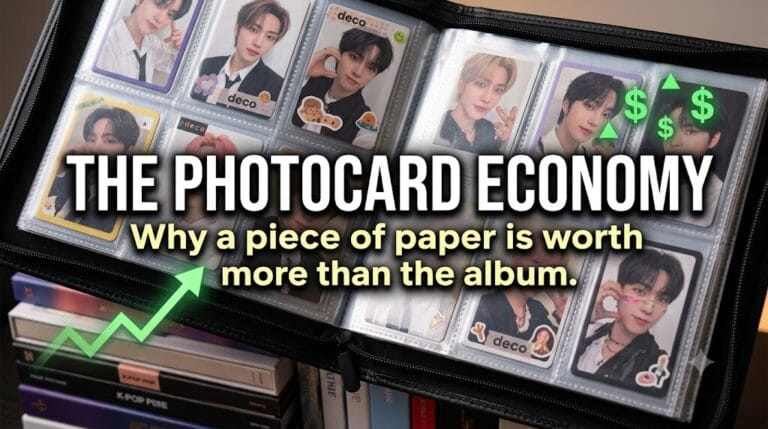
The single biggest driver of mass buying in K-pop is the random photocard system. When a fan purchases an album, they do not know which member’s photocard they will receive inside. To collect a specific member, or to complete an entire set, fans are forced to buy multiple copies. Agencies have weaponized this by releasing numerous album versions—often five, ten, or even twenty different physical variations of the same release—each containing exclusive, version-specific photocards. Store-exclusive pre-order benefits (POBs) add another layer of pressure, requiring fans to buy the same album from ten different retailers just to get exclusive holographic or special-concept cards.
Fan Sign Events and the “Lottery” System
Another massive catalyst for first-week sales inflation is the fan sign event lottery. To win a chance to speak with their favorite idols for just one or two minutes—either in person or via video call—fans must purchase albums from designated stores during the Chodong period. Because the winners are usually determined by the sheer volume of albums purchased, fans often buy dozens or even hundreds of copies to secure a single winning slot. This turns the physical album into a lottery ticket, driving up first-week sales figures artificially.
Fandom Competition and Agency Tactics
K-pop culture is heavily rooted in fandom pride and competition. Fandoms organize mass-buying fundraisers to ensure their favorite group breaks previous Chodong records, beating rival groups in the process. Entertainment agencies are fully aware of this psychological trigger. They strategically announce last-minute fan calls or release new lucky draw events right before the first week ends, squeezing every possible purchase out of the fandom to inflate the final Chodong number.
The Dark Side of Mass Buying
While entertainment companies celebrate their soaring revenues and record-breaking PR articles, the consequences of this artificial inflation are becoming too significant to ignore. The side effects of the Chodong obsession ripple across environmental, social, and cultural spectrums.
Environmental Concerns and Wasted CDs
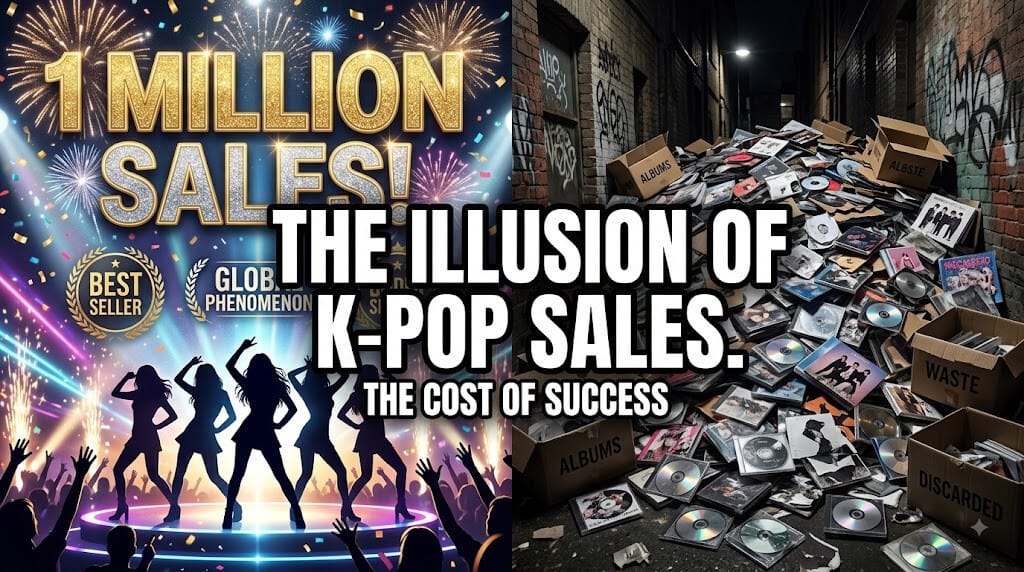
Perhaps the most visible and heavily criticized side effect is the environmental impact. Because fans buy hundreds of albums solely for the photocards and fan sign lottery entries, the actual CDs and photobooks become unwanted garbage. It is now a common sight to find boxes of freshly opened K-pop albums dumped on the streets of Seoul, left in subway stations, or thrown into charity donation bins—often with the photocards stripped out. The massive production of plastic cases, CDs, and coated paper contributes heavily to carbon emissions and physical waste, directly contradicting the eco-friendly images many agencies try to promote.
Financial Burden on Young Fans
The aggressive monetization tactics place an immense financial burden on fans, many of whom are teenagers or young adults. The fear of missing out (FOMO) on exclusive photocards, or the guilt of not contributing enough to the group’s Chodong record, pushes fans to spend beyond their means. The culture normalizes spending thousands of dollars on duplicate items, fostering unhealthy consumer habits and financial strain within the community.
Chart Distortion and Loss of Musical Value
When physical album sales are driven by lottery tickets and trading cards rather than an actual desire to listen to the music on the CD, the integrity of music charts is compromised. This sales inflation distorts the reality of an artist’s mainstream popularity. A group might sell two million physical albums but fail to chart on domestic digital streaming platforms. This creates a disconnect between the music industry’s metrics and the general public’s actual consumption, ultimately reducing the physical album from a piece of musical art to a mere piece of plastic merchandise.
Writer’s Opinion
Sometimes I look at these staggering million-seller headlines and honestly, I can’t help but feel a bit exhausted by it all, you know? It really makes you wonder—are we still celebrating the music, or are we just cheering for a well-oiled corporate money-making machine? I mean, buying 100 identical CDs just to pull a piece of cardboard and then throwing the actual music in the trash… isn’t that just fundamentally broken? It’s crazy how normalized this has become! I totally get the love for the artists, but at some point, both the agencies and the fans need to wake up and realize that this endless race for inflated numbers is completely unsustainable. What happens when the bubble finally bursts, right?