The global K-pop industry is no longer just about selling CDs and dominating music shows. As the genre has expanded into a worldwide phenomenon, the financial structures of the companies behind these massive acts have undergone a dramatic transformation. When we look closely at the “Big 4” entertainment agencies—HYBE, SM Entertainment, YG Entertainment, and JYP Entertainment—we can see a fascinating shift in how they actually make their money. It’s a complex web of direct fan engagement, digital streaming, and leveraging powerful intellectual properties (IP).
For years, the formula was relatively simple: debut a group, sell physical albums, and send them on tour. However, the modern landscape is vastly different. The revenue pies of these mega-corporations are now heavily divided among physical albums, global concert tours, merchandise (MD), and highly lucrative IP licensing deals. Understanding how these specific sectors have evolved gives us a clear picture of where the K-pop industry is heading and how these companies are future-proofing their businesses in an increasingly digital yet fiercely physical market.
The Traditional Backbone: Physical Albums and Digital Music
Even in the era of streaming, physical album sales remain a monumental pillar for K-pop agencies, though the context has changed entirely. The physical CD is no longer just a medium for music; it is a collectible piece of merchandise.
The Million-Seller Era and Its Limits
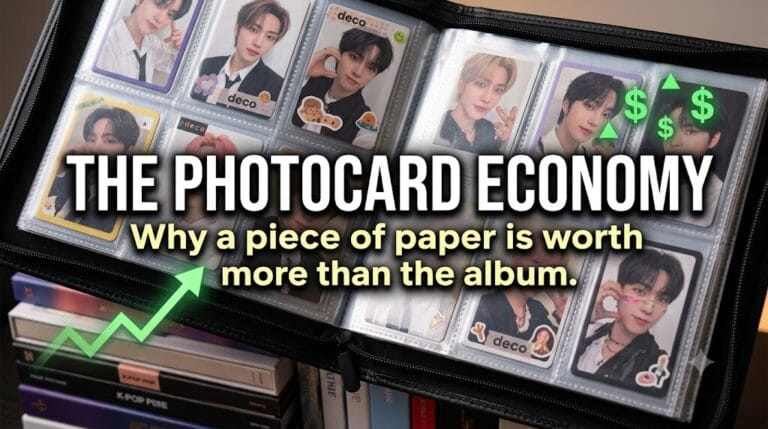
In recent years, the industry witnessed an unprecedented boom in physical album sales, often dubbed “album inflation.” Driven by photocard collecting, fan sign event lotteries, and intense fandom competition, agencies saw their album revenue skyrocket. HYBE and JYP, in particular, benefited massively from this trend with their globally expanding fandoms. However, as of late 2023 and into 2024, there has been a noticeable plateau and even a slight decline in first-week (Chodong) sales across the board. The market is slowly correcting itself as fans experience fatigue from aggressive mass-buying tactics. Agencies are now realizing that relying solely on exponential album growth is no longer a sustainable long-term strategy.
Shifting Focus to Digital and Streaming
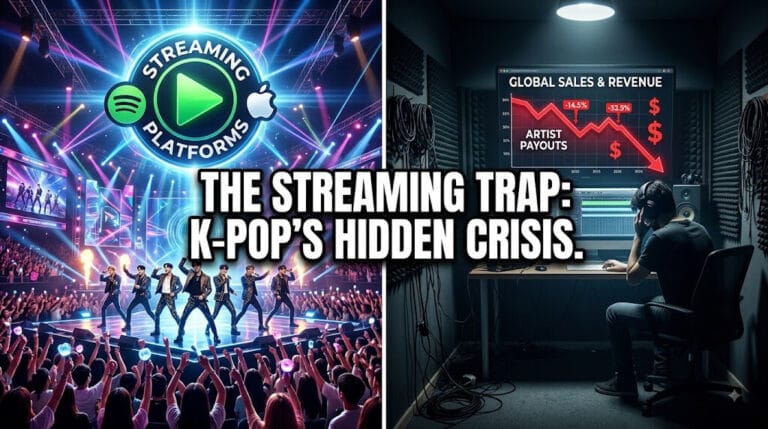
While physical sales face a potential ceiling, digital streaming revenue, especially from global platforms like Spotify and Apple Music, provides a steady, albeit smaller, stream of passive income. SM Entertainment and YG Entertainment, with their deep back catalogs of legacy artists, continue to draw significant streaming revenues. Yet, to offset the plateauing physical sales, all Big 4 companies are aggressively pushing for wider global digital distribution and mainstream playlisting to capture casual listeners outside the core fandom.
The Post-Pandemic Goldmine: Concerts and World Tours
When the world locked down, the K-pop industry quickly pivoted to online concerts. But nothing replaces the lucrative nature of live, in-person world tours.
Scaling Up to Stadiums
Since travel restrictions were lifted, the concert sector has exploded. The revenue generated from live performances has become the most critical growth engine for the Big 4. HYBE’s artists, most notably BTS (prior to military enlistment), SEVENTEEN, and TXT, have successfully transitioned into stadium-level touring acts worldwide. JYP’s Stray Kids and TWICE have also cemented their status as stadium-tier performers across North America and Asia. The scale of these tours means massive ticket revenues, often grossing millions of dollars per night.
The Domino Effect of Touring
Concerts are not just about ticket sales; they act as a massive catalyst for the other revenue streams. A successful world tour directly drives up local streaming numbers, boosts back-catalog album sales in the region, and most importantly, serves as the primary marketplace for the most lucrative sector of all: merchandise.
The High-Margin Heroes: Merchandise (MD) and Goods
If albums are the entry point and concerts are the main event, merchandise is where the profit margins truly soar. The “MD” sector has evolved from simple t-shirts to a sophisticated lifestyle brand ecosystem.
Concert MD: The Ultimate Revenue Multiplier
The synergy between touring and merchandise is undeniable. Fans attending concerts are highly motivated buyers. Agencies have perfected the art of “tour-exclusive” merchandise, creating artificial scarcity that drives massive lines at concert venues. Items like official lightsticks, which sync with the concert’s stage lighting, are practically mandatory purchases for attendees. YG Entertainment, with groups like BLACKPINK and TREASURE, has historically excelled in creating high-quality, fashionable tour merchandise that fans want to wear even outside the concert venue.
Beyond the Concert: Pop-up Stores and Collaborations
The Big 4 have expanded their MD strategies far beyond concert venues. HYBE leads this charge with elaborate pop-up stores in major global cities that coincide with artist comebacks or tours. These stores sell exclusive apparel, accessories, and lifestyle goods. Furthermore, collaborations with global brands—such as artist-designed characters (like LINE FRIENDS’ BT21 or TRUZ)—create a continuous, high-margin revenue stream that doesn’t rely entirely on the artist’s physical presence.
The Future Frontier: IP Licensing and Indirect Revenue
The most significant shift in the Big 4’s revenue structure over the last five years is the aggressive expansion of Intellectual Property (IP) licensing. Agencies are transforming from simple talent management companies into holistic IP powerhouses.
Monetizing the Artist’s Brand
“Indirect-involvement” revenue is the holy grail for modern K-pop agencies. This means making money without the artists actually having to sing, dance, or be physically present. It includes licensing the artist’s name, likeness, or character designs for video games, brand endorsements, webtoons, and platform integrations. HYBE’s Weverse platform is a prime example of utilizing IP to create a closed ecosystem where fans pay for subscriptions, exclusive content, and digital goods.
Expanding the Lifespan of K-Pop
SM Entertainment has long experimented with IP expansion through its “SMCU” (SM Culture Universe), attempting to build Marvel-like lore around its artists to sell comic books and digital collectibles. IP licensing allows agencies to decouple their revenue from the physical limitations of their artists. If a group is on hiatus or members are fulfilling mandatory military service, their character IP can still generate millions through mobile games or brand partnerships. As physical album sales stabilize, the growth of the IP licensing sector will likely be the primary battleground for the Big 4 in the coming years.
Writer’s Opinion
Looking at all these numbers and shifting trends… isn’t it just wild how much the K-pop business model has evolved? I mean, we used to just buy a CD and call it a day! Now, it feels like we are investing in entire ecosystems, from stadium tours to digital characters. It really makes you wonder—at what point does the merchandise and IP overshadow the actual music? Don’t get me wrong, I love a good concert lightstick as much as anyone, but seeing agencies pivot so hard toward high-margin goods because album sales are hitting a ceiling… well, it’s a bit bittersweet, isn’t it? It shows brilliant business acumen, sure, but I just hope they never forget that the music and the artists’ raw talent are what built these massive empires in the first place!