The global phenomenon of K-pop is no longer just about addictive melodies, stunning visuals, and perfectly synchronized concepts. Over the past few years, a massive paradigm shift has occurred, moving the hidden architects of K-pop into the absolute center of the spotlight. These architects are the choreographers, the visionary dance artists who translate auditory rhythms into iconic visual languages. Through hit survival shows like Street Woman Fighter and global viral dance challenges, choreographers have evolved from behind-the-scenes directors into major industry trendsetters who actively shape the brand identity of top-tier idol groups.
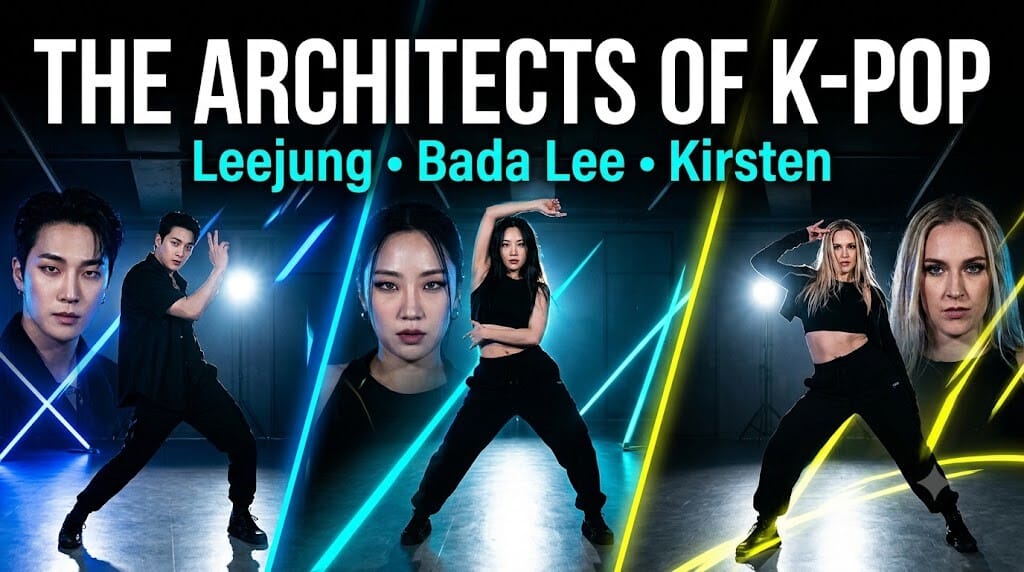
Every K-pop group has a signature “color”—a specific vibe, energy, or aesthetic that defines their music and connects with fans globally. While music producers lay down the sonic foundation, it is the choreographer who builds the physical world the idols inhabit. By analyzing the distinct artistic styles of legendary masterminds like Leejung Lee, Bada Lee, and Kirsten Dodgen, we can unlock the fascinating “choreography stylistics” that dictate how modern K-pop groups define their visual identity and capture the cultural zeitgeist.
The Architecture of Rhythm: Leejung Lee and the Power of Dynamic Precision
When discussing the modernization of K-pop choreography, Leejung Lee stands as a monumental figure. Known for her work with absolute powerhouses like BLACKPINK, ITZY, and TWICE, Leejung’s style is best described as highly structural, punchy, and remarkably clean. Her background in hip-hop dance crew culture allows her to break down complex musical beats into incredibly sharp, isolated body movements. Rather than relying on massive, sweeping formations, Leejung excels at creating localized bursts of intense energy that make individual members pop on screen.
Micro-Movements and Facial Emphases
One of Leejung’s defining signatures is her masterful integration of micro-movements, particularly hand, finger, and facial expressions. In an era dominated by vertical video platforms like TikTok, Instagram Reels, and YouTube Shorts, these isolated gestures are pure gold. For example, her choreography for BLACKPINK’s “Pink Venom” and ITZY’s “WANNABE” features memorable point dances that are instantly recognizable and highly replicable for fans. She understands that in K-pop, the face tells as much of the story as the feet, seamlessly weaving charismatic facial performance cues into grueling physical routines.
Symmetrical Formations and Textural Contrast
Another core element of Leejung’s stylistics is the clean execution of symmetry. Her stagings often feature a strong center anchor with perfectly balanced wings. This provides a sense of authority and stability to the performing group, making them look intensely synchronized and unified. She creates textural contrast by alternating between rapid-fire isolations and fluid, undulating transitions. This gives the audience a rhythmic rollercoaster ride, ensuring that the visual performance never feels stagnant, even for a single second.
The King of Chill and Trendy Grooves: Bada Lee’s Street-Style Revolution
If Leejung represents structured precision, Bada Lee represents the absolute pinnacle of effortless trendiness and relaxed power. Rising to massive mainstream fame as the leader of the dance crew BEBE on Street Woman Fighter 2, Bada Lee has fundamentally changed the texture of modern boy group and girl group choreography. Working with mega-stars like NCT, aespa, RIIZE, and Kai, her style injects an authentic, raw street-dance groove directly into the polished pop landscape.
Effortless Swag and Linear Extensions
Bada Lee’s choreography is instantly identifiable by its deep, relaxed pockets of groove. She utilizes a lower center of gravity, emphasizing hip control, relaxed shoulders, and complex footwork that looks deceptively easy but requires immense core strength. Her work with RIIZE and NCT showcase a distinct “effortless swag” that appeals heavily to Gen Z audiences. Instead of rigid, military-like synchronization, Bada allows for individual styling within a group formation, giving the performers a hip, rebellious edge that feels deeply authentic.
Viral Geometry: Crafting the Next Mega-Challenge
Beyond the groove, Bada Lee is an absolute genius at creating viral geometry. Her iconic choreography for Dynamic Duo’s “Smoke” became a global sensation precisely because it utilized large, satisfying linear extensions of the arms and upper body paired with rhythmic chest drops. She understands the spatial limitations of a phone screen and designs her “point dances” to maximize the use of negative space around the dancer’s body. By doing so, she ensures that when a K-pop group performs her choreo, it looks incredibly impactful both on a massive stadium stage and a tiny mobile device.
Global Royalty of Expression: Kirsten Dodgen and the Infusion of Pure Performance Power
Bringing a fiercely international flavor to the K-pop industry, Kirsten Dodgen (famous for her work with the world-renowned Royal Family dance crew and JAM REPUBLIC) has introduced an entirely new dimension of performance power. Kirsten’s style is deeply rooted in polyrhythmic dancehall, heavy hip-hop, and raw, theatrical storytelling. Her collaborations and presence in the K-pop ecosystem have pushed female idol groups to embrace a level of uninhibited athletic power, sensuality, and ground-work that was previously rare in the mainstream market.
Body Positivity and Unfiltered Athleticism
Kirsten’s choreographic philosophy revolves around absolute body confidence and explosive power. Her movements utilize the entire kinetic chain—originating deep from the core and exploding through the limbs. When working within K-pop or inspiring its current trajectory, her style demands that dancers occupy as much physical space as possible. It is a radical departure from the traditionally cute or strictly elegant expectations placed on female performers, replacing them with a fierce, commanding presence that redefines what a powerful K-pop performance looks like.
Rhythmic Complexity and Accent Control
What separates Kirsten from standard hip-hop choreographers is her astonishing control over musical accents. She doesn’t just choreograph to the main beat or the lyrics; she finds the hidden, subterranean syncopations in a track. Her style teaches K-pop performers how to decelerate and accelerate their movements dynamically. This unpredictable pacing creates an electric tension on stage, making the audience hang on every single movement, wondering whether the next beat will bring a subtle glide or a devastatingly sharp drop.
Comparative Framework: How Choreographic Choices Dictate Group Branding
To fully appreciate how these three masterminds shape the industry, it is helpful to look at how their artistic DNA directly translates into a K-pop group’s overarching brand identity.
| Choreographer | Core Stylistic DNA | Visual Branding Impact on K-Pop Groups | Key Examples |
| Leejung Lee | Sharp isolations, symmetrical structure, micro-gestures. | High-end polish, absolute synchronization, hyper-marketable point dances. | BLACKPINK, ITZY, TWICE |
| Bada Lee | Low center of gravity, street groove, linear extensions. | Effortless Gen Z trendiness, hip-hop swag, casual but powerful cool factor. | RIIZE, aespa, NCT |
| Kirsten Dodgen | Kinetic explosion, polyrhythmic accents, fierce theatricality. | Raw empowerment, boundary-pushing athleticism, commanding global presence. | JAM REPUBLIC, Le Sserafim concepts |
By choosing a specific choreographer, a entertainment agency is doing much more than just hiring a dance instructor; they are selecting a visual director who will determine how the public physically perceives the music. A track given to Leejung will become a sharp, dazzling showcase of mechanical perfection. The exact same track given to Bada Lee will transform into a laid-back, trendy masterclass in street style.
The Future of Visual Music: Choreographers as Primary Auteurs
As we look toward the future of the global music industry, the line between musical artist and choreographic auteur will continue to blur completely. K-pop has successfully proven to the world that dance is not merely a decorative accompaniment to music—it is a vital, equal partner in the storytelling process.
The unique stylistic vocabularies of Leejung, Bada Lee, and Kirsten have elevated K-pop into a highly sophisticated visual art form. They have given groups their distinct physical signatures, turned tracks into viral cultural movements, and earned their rightful places as creative directors in their own right. The next time you watch a K-pop music video or music show performance, look past the flashing lights and the dazzling outfits, and look closely at the movement. There, written in every sharp turn, smooth glide, and powerful jump, you will find the true signature of the master choreographers shaping global pop culture.
Writer’s Opinion
Watching the rise of K-pop choreographers has been one of the most exciting cultural shifts in recent music history. For decades, dance directors were the unsung heroes hidden in the shadows of the entertainment industry, rarely getting the credit or the mainstream recognition they deserved. Today, they are rightfully celebrated as mainstream icons and crucial creative directors who hold the power to define a K-pop group’s destiny.
I truly believe that what makes Leejung, Bada, and Kirsten so brilliant is their ability to treat the human body as a living canvas that speaks directly to the audience. They don’t just teach steps; they build distinct visual universes. This newfound visibility for choreographers doesn’t just elevate the dance community—it enriches the entire K-pop ecosystem, reminding us all that the physical language of dance is just as powerful, universal, and transformative as the music itself.