The landscape of global music fandoms has always been a fascinating subject of sociological study, but nowhere is its rapid evolution more apparent than in the modern K-pop industry. For decades, the fundamental dynamic between idols and their fans was largely built upon a foundation of idealized romantic fantasy and profound admiration. Agencies meticulously crafted personas designed to appeal to the “boyfriend” or “girlfriend” ideal, encouraging fans to project their romantic desires onto these seemingly unreachable stars. This phenomenon, widely recognized as parasocial romance, drove album sales, concert attendance, and unprecedented levels of fan engagement. However, as the industry transitions fully into the era of fourth and fifth-generation idols, a dramatic psychological shift is actively rewriting the rules of fan engagement and consumption.
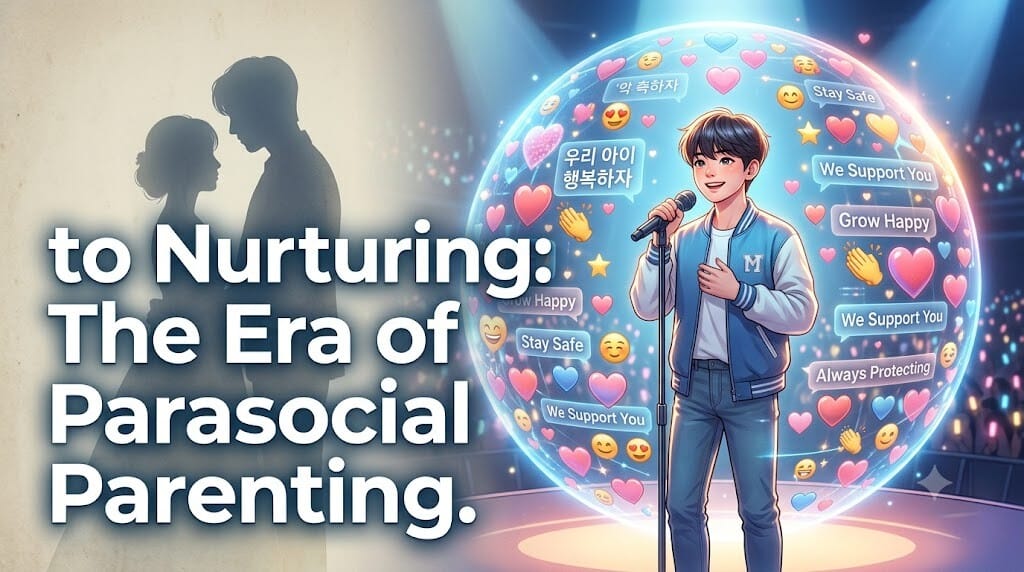
Today, the core emotional driver for many K-pop consumers has fundamentally transformed from a desire to “date” the idol to a profound, fiercely protective urge to “raise” them. We are witnessing the unprecedented rise of “parasocial parenting” or “parasocial nurturing” within fandom spaces. As idols debut at increasingly younger ages, the audience’s gaze has shifted away from awe and romantic longing toward a maternal or paternal instinct. Fans no longer simply look up to these artists as flawless beings of perfection; instead, they view them as young, vulnerable individuals navigating a highly pressurized and often unforgiving entertainment industry. This shift from parasocial romance to parasocial parenting is not merely a change in slang or social media trends—it is a complete restructuring of fandom consumer behavior, reshaping how money is spent, how agencies are held accountable, and how the future of K-pop is being written.
The Evolution of K-Pop Fandom Dynamics
To fully grasp the magnitude of this psychological shift, it is essential to trace the historical progression of fan-idol relationships. The K-pop industry has always been highly adaptable, molding its marketing strategies to fit the emotional needs of its target demographics.
From Parasocial Romance to Parasocial Parenting
During the first, second, and even third generations of K-pop, the marketing was heavily reliant on selling a romantic illusion. Idols were framed as the ultimate, idealized partners. Fans engaged in “parasocial romance,” a one-sided psychological relationship where the fan feels a deep, often romantic connection to a media persona. The terminology used within fandoms—referring to idols as “oppa” (older brother/romantic interest for females) or focusing heavily on their physical attractiveness in a romantic context—reflected this dynamic. The ultimate fantasy was closeness on an equal, peer-to-peer, or romantic level.
However, as the fourth and fifth generations took center stage, a distinct pivot occurred. The language of fandom underwent a massive overhaul. Instead of romantic monikers, fans began referring to their favorite idols as “my baby,” “my child,” or “my son/daughter.” Fans started adopting the self-proclaimed title of “mom” or “parent,” openly declaring that their primary goal is to protect the idol from the harsh world, ensure they are eating well, and watch them grow into successful adults. This is the essence of parasocial parenting: an emotional investment centered on nurturing, protecting, and fostering growth rather than seeking romantic reciprocation.
Characteristics of 4th and 5th Generation Idols
The idols belonging to the fourth and fifth generations are distinct from their predecessors in several key ways. First, they are digital natives, having grown up entirely in the age of social media, making them highly relatable and deeply connected to internet culture. Second, the curtain has been pulled back on the idol training process. Through survival shows, pre-debut vlogs, and behind-the-scenes documentaries, fans are now privy to the grueling struggles, tears, and exhaustion these young individuals face before they even step onto a stage. Seeing a fourteen or fifteen-year-old trainee cry over a missed dance step inherently strips away the untouchable, perfect “star” persona and replaces it with a vulnerable child who desperately needs encouragement. This transparency naturally fosters a protective, parental instinct in the viewer.
Why “Parasocial Parenting” is Taking Over
The transition toward a nurturing fandom culture did not happen in a vacuum. It is the direct result of intersecting industry trends, demographic shifts, and the psychological realities of modern consumers.
The Youthfulness of Debuting Idols
Perhaps the most significant catalyst for this shift is the steadily decreasing age of debuting idols. It is now commonplace for K-pop groups to include members who are fourteen, fifteen, or sixteen years old. Meanwhile, the global K-pop fandom has aged and expanded, encompassing fans in their twenties, thirties, and forties who possess significant disposable income. For a twenty-five-year-old or thirty-year-old fan, looking at a fifteen-year-old idol through a romantic lens is not only socially inappropriate but fundamentally jarring. Instead, the natural human response when observing a talented, hardworking youth is to wish them well, protect their innocence, and support their dreams. The age gap inherently neutralizes romantic projection and encourages a nurturing dynamic.
A Desire to Protect in a Harsh Industry
The modern consumer is highly educated about the darker aspects of the entertainment industry. News of punishing schedules, extreme dieting, mental health struggles, and unfair contracts are no longer industry secrets; they are widely discussed topics on global platforms like X (formerly Twitter) and Reddit. Fans are acutely aware that the idols they adore are operating within a high-stress environment that can be detrimental to their physical and mental well-being. Consequently, the fandom adopts a protective stance. They view themselves as the ultimate shield between the young idol and an exploitative industry. This protective instinct is a core pillar of parasocial parenting—the fan feels a moral obligation to ensure the “child” is safe, happy, and treated fairly by their corporate management.
Relatability Over Perfection
In the past, idols were expected to maintain a flawless, almost robotic level of perfection at all times. Any deviation from this heavily manicured image was met with severe backlash. However, the current generation of fans values authenticity and relatability above all else. When a fourth or fifth-generation idol makes a minor mistake on stage, nervously fumbles an interview, or shares their anxieties on a live stream, it is no longer viewed as a career-ending flaw. Instead, it is endearing. It triggers the “cute aggression” and parental empathy of the fans, who rush to reassure the idol. The imperfections are what make the idols human, and it is precisely this humanity that fans wish to nurture and protect.
How This Shifts Fandom Consumption Patterns
The psychological shift from romance to parenting has profoundly altered how fans spend their time, energy, and money. It has given rise to entirely new forms of consumer behavior that agencies must learn to navigate.
Purchasing Power as “Child Support”
In a parasocial romantic dynamic, buying albums or merchandise might be seen as buying a “gift” for a partner or a token of devotion. In the era of parasocial parenting, financial support is often jokingly, yet accurately, referred to as paying “child support” or investing in the child’s education and future. Fans buy multiple albums, stream music videos endlessly, and vote in award shows not just to feel close to the idol, but to ensure the idol’s career stability. The mindset is: “If I buy this album, my child’s agency will treat them better, they will get better opportunities, and their future will be secure.” The consumption is driven by a desire to provide for the idol’s success and well-being, mirroring the sacrifices parents make for their children.
Defensive Fandoms and Agency Accountability
Because fans now view themselves as the protectors of these young artists, they have become incredibly militant when it comes to holding entertainment agencies accountable. If fans believe an idol is being overworked, given poor styling, or inadequately promoted, they do not hesitate to organize massive boycotts, send protest trucks to the agency headquarters, and launch coordinated email campaigns. They act much like aggressive “helicopter parents” demanding answers from a school board. This level of organized pushback is a direct result of the nurturing instinct; fans are no longer passive consumers, but active guardians demanding the best possible environment for their “kids.”
The Psychological Appeal of Nurturing Idols
Why is this dynamic so fulfilling for the fans themselves? In an increasingly chaotic, isolated, and economically challenging modern world, traditional milestones of adulthood—such as homeownership or starting a family—are being delayed or entirely foregone by many young adults. Parasocial parenting offers a safe, low-stakes avenue to express nurturing instincts and experience the joy of watching someone grow and succeed.
When a fan supports a rookie idol from their debut and watches them eventually win a major music award or perform at a massive stadium, the fan experiences a genuine sense of pride and accomplishment. It is a shared victory. The emotional reward of parasocial nurturing is immense; it provides a sense of purpose, community, and unconditional positive regard that is incredibly comforting. Furthermore, unlike real-life parenting, parasocial parenting allows the fan to engage in the “fun” aspects of raising a child—celebrating milestones, buying gifts, and feeling proud—without the exhausting day-to-day responsibilities and financial burdens of actual child-rearing.
The Double-Edged Sword of Idol Parenting
While the shift toward a protective fandom culture has many positive aspects, including a greater emphasis on idol mental health and better working conditions, it is not without its risks. The intense protective instinct can easily cross the line into infantalization. Treating adult idols as helpless children who cannot make their own decisions strips them of their agency and maturity. When fans aggressively dictate who an idol can associate with, what they should wear, or what projects they should take on—all under the guise of “protecting” them—it creates a stifling environment for the artist. Agencies and fans alike must learn to balance this deep nurturing instinct with a fundamental respect for the idol’s autonomy as they mature into adulthood.
Ultimately, the transition from parasocial romance to parasocial parenting marks a maturing of K-pop fandom culture. It reflects a deeper empathy, a demand for industry transparency, and a redefinition of what it means to support an artist. As the fourth and fifth generations continue to shape the global music landscape, this protective, nurturing dynamic will undoubtedly remain the beating heart of K-pop consumer behavior.
Writer’s Opinion
Wait, is it just me, or does this whole ‘raising an idol’ thing make total sense when you look at how stressful real life is right now? I mean… we’re all so exhausted by our own responsibilities, so maybe cheering for a 16-year-old to achieve their dreams gives us that little hit of dopamine we desperately need. It’s like playing a real-life simulation game but with actual human emotions attached, right?! I do worry sometimes that fans take it a bit too far—like, dictating an idol’s every move isn’t really “protecting” them, is it? But at the end of the day, isn’t it fascinating how our human instinct to care and nurture just completely bypassed traditional romance and found a new home in K-pop? Makes you wonder what the 6th generation will bring… maybe we’ll be paying for their digital retirement funds!