The global phenomenon of K-pop has long been defined by its pursuit of absolute perfection. From synchronized choreography that defies human stamina to flawlessly curated public personas, entertainment agencies invest millions of dollars and years of rigorous training into producing the ultimate human idols. However, this high-risk, high-reward business model fundamentally relies on the most unpredictable variable in existence: human beings. A single misstep—be it a dating rumor, a resurfaced past controversy, physical exhaustion, or the mandatory military enlistment required of all South Korean men—can instantly derail a multi-million-dollar IP, sending a publicly traded company’s stock plummeting overnight. The sheer fragility of this human capital has left agencies desperately searching for a more stable, controllable alternative.
Enter the era of the virtual K-pop idol, a groundbreaking fusion of music, artificial intelligence, and cutting-edge digital avatar technology. By replacing flesh-and-blood performers with meticulously designed virtual characters, the industry is pioneering a revolutionary business model that eliminates the inherent vulnerabilities of human artists. Groups like PLAVE and MAVE: are no longer just niche experiments; they are chart-topping realities drawing massive fandoms, selling out digital concerts, and generating millions in merchandise revenue. This shift isn’t merely a technological gimmick; it is a calculated, financially driven strategy designed to exert absolute control over the idol product. By exploring how AI and virtual avatars are rewriting the rules of the K-pop ecosystem, we can uncover whether this flawless, scandal-free approach is truly the definitive future of the industry’s profitability.
The Immense Cost of Human Risk in K-Pop
To understand why agencies are pivoting toward virtual idols, one must first look at the traditional idol lifecycle. Building a K-pop group is a massive upfront investment. Agencies cover vocal training, dance lessons, housing, food, and styling for years before a group even debuts, hoping to eventually break even.
The Fragility of the Human Persona
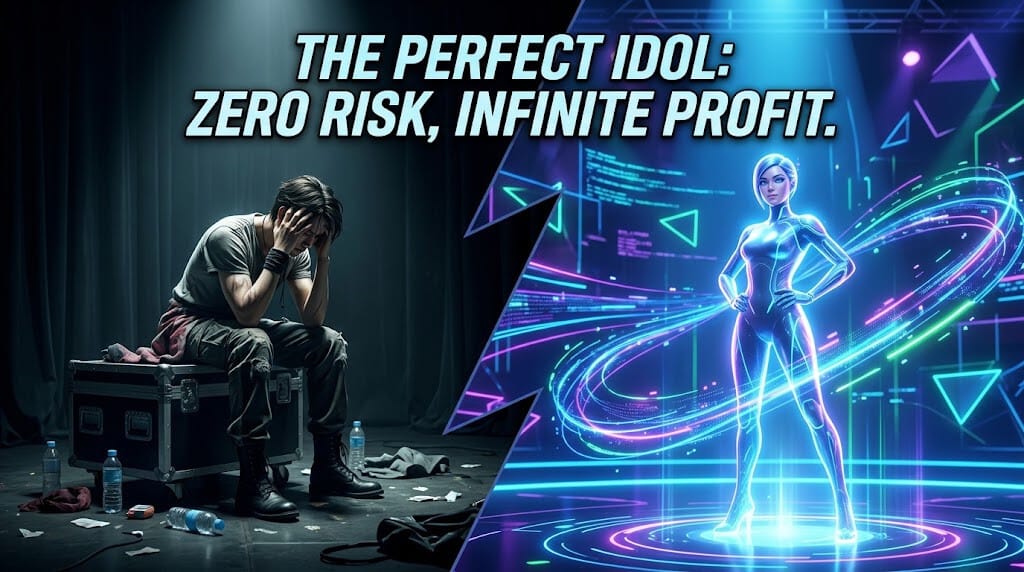
Once a group reaches stardom, the financial stakes become astronomical. Yet, a human idol is vulnerable to physical and emotional exhaustion. Furthermore, the K-pop industry is notoriously strict regarding the private lives of its stars. A sudden dating scandal, an unverified rumor on social media, or a mental health hiatus can lead to canceled world tours, severed brand endorsement contracts, and massive financial losses. The “human risk” is the ultimate bottleneck in a K-pop agency’s scalability and long-term financial security.
The Military Enlistment Revenue Gap
For male K-pop groups, South Korea’s mandatory military service creates a guaranteed, unavoidable hiatus of at least 18 months. During this period, group promotions halt, and agencies lose their primary revenue drivers. This recurring fiscal cliff has historically been one of the hardest challenges for major entertainment labels to navigate without seeing a massive dip in their quarterly earnings.
Enter the Virtual Idol: A Flawless Business Model
The solution to these unpredictable human variables has arrived in the form of pixels, motion capture, and artificial intelligence. Virtual idols are digital avatars that perform, sing, and interact with fans. They can be driven by human actors behind the scenes (similar to VTubers) or powered entirely by AI voice synthesis and deep learning technologies.
Ultimate Brand Safety and Corporate Control
From a corporate perspective, the virtual idol is the perfect employee. A digital avatar does not get tired, does not age, does not demand contract renegotiations, and most importantly, does not get caught up in late-night scandals. This unprecedented level of brand safety is incredibly attractive to investors and corporate sponsors. Brands can hire a virtual idol for a luxury fashion campaign knowing with absolute certainty that the model will not ruin the advertisement with a real-world controversy.
Infinite Scalability and 24/7 Availability
Human idols are bound by time zones and physical limitations. They cannot perform a concert in Tokyo while simultaneously doing a fan meet-and-greet in New York. Virtual idols, however, exist in the digital ether. Through AI language models and digital rendering, a virtual K-pop group can hold concurrent, highly personalized events across multiple global markets. They can stream to fans 24/7, speaking perfectly localized English, Japanese, Spanish, and Korean without ever needing a translator.
Case Studies: The Rise of PLAVE and MAVE:
The success of virtual idols is no longer a theoretical concept pitched in boardrooms. It is happening right now, backed by massive fandoms and undeniable streaming numbers on global platforms.
PLAVE: Bridging the Human-Digital Divide
PLAVE, a virtual boy group, has taken the industry by storm. Unlike pure AI, PLAVE utilizes real-time motion-capture technology where actual humans (often referred to as the “actors” or “souls” behind the avatar) sing and dance live. This hybrid model allows for authentic fan interactions, clumsy mistakes, and genuine humor during live streams, which builds a strong emotional connection. Yet, the visual IP—the avatar itself—remains perfectly intact, protecting the human behind the screen and giving the agency total ownership of the visual character.
MAVE: The Fully Synthetic Frontier
On the other end of the spectrum is MAVE:, a group built heavily on AI and computer-generated imagery. Their debut music video garnered tens of millions of views, proving that audiences are completely willing to consume synthetic media if the music, visuals, and production value meet K-pop’s notoriously high standards. MAVE: represents the ultimate realization of the IP-driven business model: total creation, total ownership, and absolutely zero human unpredictability.
The Financial Mastery of Forever IP
Perhaps the most crucial aspect of the virtual idol business model is the concept of Intellectual Property (IP) retention. In the traditional K-pop model, the “7-year curse” is a well-known industry phenomenon. After seven years, standard artist contracts expire. If the group is successful, the human idols hold all the leverage. They can demand massive cuts of the profits, or they can leave the agency altogether, taking their massive fanbases with them.
With virtual idols, the agency owns the IP forever. The character cannot leave to start a solo career at a rival agency. If the motion-capture actor behind the avatar decides to quit, the agency can simply hire a new actor to wear the digital suit. The fanbase remains loyal to the avatar, the storyline, and the digital persona, effectively transferring the financial power from the human talent back to the corporation.
Can AI Replicate the Parasocial Bond?
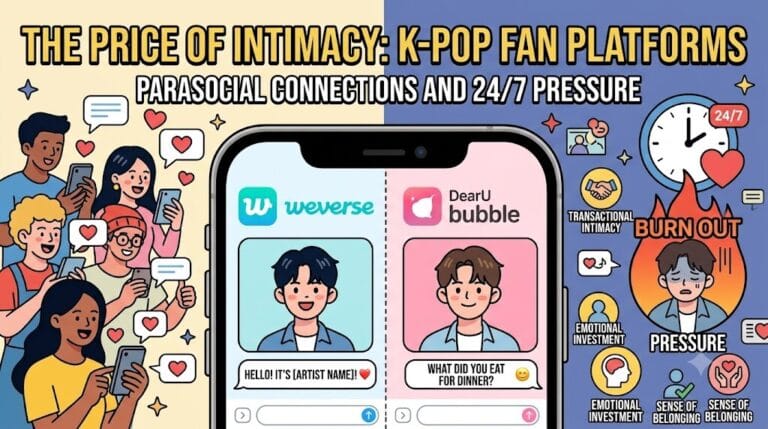
Critics often argue that virtual idols lack the “soul” required to build a genuine fandom. However, the data suggests otherwise. The modern K-pop industry is already built on parasocial relationships—one-sided psychological bonds where fans feel deeply connected to highly curated personas. Fans are already interacting with their favorite human idols through screens via apps like Weverse or Bubble.
For the newer, digitally native generations, the leap from adoring a heavily filtered human on a smartphone screen to adoring a beautifully rendered digital avatar is practically non-existent. As long as the music slaps, the choreography is engaging, and the digital personality is endearing, fans will gladly suspend their disbelief. The emotional investment is completely real, even if the idol is made of code.
Writer’s Opinion
Wait, so is the future of our absolute favorite music just going to be… perfect little pixels generated by a computer? Honestly, when I first started looking into these AI idols and the corporate strategies behind them, I was super skeptical—like, how can you genuinely stan a computer program, right?! But the more I watched groups like PLAVE messing up, glitching, and laughing during their live streams, the more I caught myself actually smiling at the screen. It is completely wild to think that entertainment companies have literally found a way to “hack” the human risk out of the equation! But it also makes me wonder… if everything is perfectly controlled and there are no real struggles, no backstage tears, and no raw human flaws, won’t we eventually miss the messy, unpredictable humanity that made us fall in love with K-pop in the first place? I mean, perfection is great for business, but isn’t it the human imperfections that actually connect our hearts to the music?!