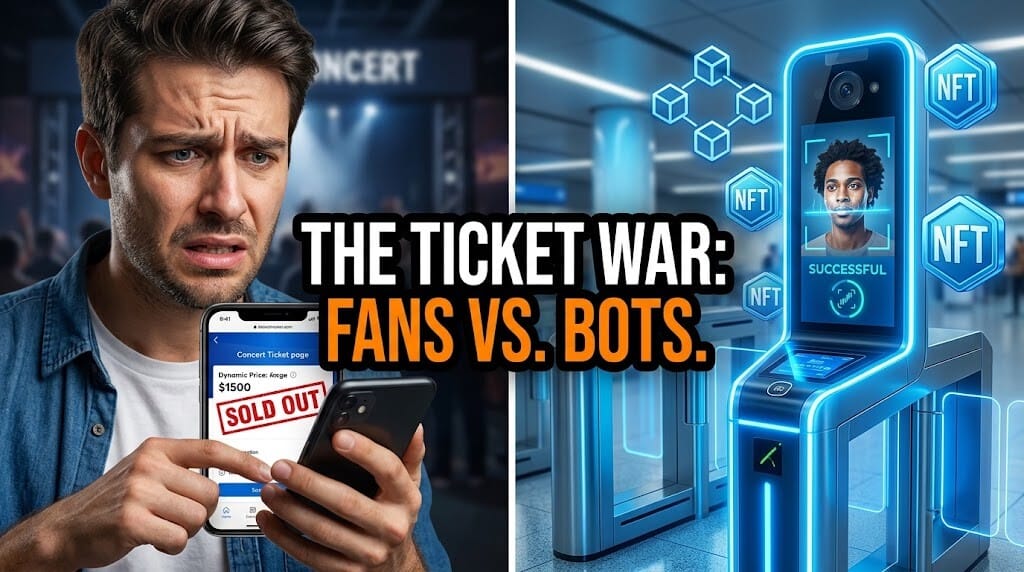
The live entertainment industry is currently witnessing a massive, multi-billion-dollar war, and the primary battleground is your digital shopping cart. If you have tried to buy tickets for a major stadium tour recently—whether it is Taylor Swift, Oasis, or a massive global K-Pop act—you have likely experienced the crushing, anxiety-inducing disappointment of staring at a digital queue behind 500,000 other people. Only to find, after hours of waiting, that the face-value tickets are completely gone in a matter of seconds. What replaces them is a secondary market filled with exorbitant, heavily inflated prices, leading to widespread outrage among passionate fans who simply want to see their favorite artists perform live. But the frustration does not stop at traditional scalpers hiding on secondary resale sites; the live entertainment industry itself has introduced internal mechanisms that make purchasing a concert ticket feel uncomfortably similar to day-trading on the stock market.
At the absolute center of this chaotic digital storm are two major, highly controversial developments: the introduction of dynamic pricing models by ticketing monopolies like Ticketmaster, and the technological arms race against macro-using bot networks. On one side, ticketing platforms claim that fluctuating, demand-based prices are the only mathematical and economic way to beat scalpers, ensuring that the artists themselves get paid the true market value of their live performance rather than surrendering that profit to unauthorized third parties. On the other side, ordinary fans argue that dynamic pricing is just corporate scalping disguised as a logistical solution, pushing working-class audiences entirely out of the live music ecosystem. In response to this PR nightmare and structural failure, the entertainment industry is desperately testing sci-fi-level technologies—ranging from blockchain-based NFT ticketing to stadium facial recognition systems—to reclaim control over who actually gets into their venues. Understanding this incredibly complex web of economics, technology, and fan psychology is essential for anyone who wants to know why attending a live concert has become an extreme luxury sport.
The Rise of the Botnet: How Macro Scalpers Broke the System
To understand the current ticketing crisis, we must first look at how the enemy has evolved. The days of a shady figure standing outside a venue holding a handful of paper tickets and whispering “need a ticket?” are long gone. The modern scalper is a highly sophisticated, technologically advanced digital syndicate.
The Anatomy of a Ticketing Bot
Today’s scalping industry operates on a massive, automated scale using what are known as “macro bots.” These are highly specialized software programs designed to do one thing: bypass digital queues and purchase maximum ticket limits faster than any human possibly could. When tickets for a highly anticipated tour go on sale, these botnets flood the ticketing servers. They utilize rotating IP addresses to mask their location, preventing platforms from blocking a single malicious source. Furthermore, they are equipped with advanced automated scripts that can instantly solve CAPTCHA puzzles—those annoying “click all the images with traffic lights” tests designed specifically to stop them.
Within milliseconds of a ticket going live, a macro bot can select the best available seats, auto-fill stolen or prepaid credit card information, and complete the checkout process. By the time a legitimate fan’s browser has even loaded the seating chart, entire blocks of the stadium have been systematically harvested.
The Secondary Market Gold Rush
Once these macro scalpers secure the inventory, they immediately dump the tickets onto secondary market platforms like StubHub, SeatGeek, or Viagogo. Because the demand for mega-artists vastly outstrips the supply of seats, scalpers can comfortably list a $100 ticket for $1,000, knowing that a desperate fan will eventually pay the ransom. This creates a deeply parasitic secondary economy.
The most frustrating aspect for the entertainment industry is that the artists—the people actually performing and generating the demand—see absolutely zero dollars from this secondary markup. If a scalper makes a $900 profit on a resale, that money bypasses the artist, the promoters, and the venue entirely. It is a massive drain on the industry’s potential revenue, which perfectly sets the stage for the industry’s most controversial counter-measure.
Enter Dynamic Pricing: Ticketmaster’s Controversial Solution
Faced with the unstoppable reality of botnets and massive secondary market profits, Ticketmaster (and its parent company Live Nation) decided to implement a deeply controversial economic strategy: if people are willing to pay $1,000 for a ticket on the secondary market, why shouldn’t the ticketing platform and the artist capture that revenue directly on the primary market? This philosophy birthed the era of “Dynamic Pricing.”
The Airline Model Applied to Concerts
Dynamic pricing, sometimes branded as “Platinum Tickets,” is an algorithmic pricing model borrowed directly from the airline and hotel industries. Instead of setting a fixed, static price for a seat, the ticketing platform uses an algorithm to monitor real-time demand. If a million people log on to buy tickets for a 50,000-seat stadium, the algorithm immediately recognizes the hyper-demand and automatically raises the price of the remaining tickets.
The logic, from a purely economic standpoint, is flawless: you price out the scalpers. If a scalper’s business model relies on buying a ticket for $100 and selling it for $500, Ticketmaster simply raises the initial face value to $500. The scalper loses their profit margin and drops out of the queue, theoretically leaving the ticket available for a “true fan” who is willing to pay the premium. Furthermore, the extra $400 generated by the dynamic surge goes directly into the pockets of the artist and the promoter, exactly where it belongs.
The Backlash from the Fandom
However, logic does not always translate well to human emotion, and the fandom backlash against dynamic pricing has been nothing short of nuclear. When legendary artists like Bruce Springsteen, Taylor Swift, or recently reunited Oasis utilized these demand-based systems, fans were horrified. Working-class fans who waited in digital queues for hours finally got through, only to find that basic nosebleed seats had surged from $85 to an astronomical $600.
Fans argue that dynamic pricing is simply corporate scalping. While it achieves the goal of cutting out the third-party botnets, it ultimately punishes the very fans who support the artist. The system turns live music into an exclusive club for the wealthy, destroying the communal, egalitarian spirit that rock and pop music was built upon. The outrage has grown so intense that government bodies in the United States and the United Kingdom have launched antitrust investigations into ticketing monopolies, forcing the entertainment industry to look for alternative, less hostile ways to combat scalpers.
The Entertainment Industry Strikes Back: Technological Interventions
Knowing that dynamic pricing is destroying their public relations, entertainment agencies, promoters, and tech startups are pouring millions into cutting-edge technological solutions. The goal is to find a way to eliminate bots and control resale prices without alienating the fanbase. This has led to the adoption of technologies previously reserved for high-level security sectors.
Facial Recognition Technology at the Gates
One of the most aggressive solutions currently being tested is biometric ticketing, specifically facial recognition. The concept is straightforward: your face is your ticket. When a fan purchases a ticket online, they must upload a clear selfie to the ticketing platform. The digital ticket is then permanently cryptographically locked to that specific facial biometric data.
When the fan arrives at the stadium, they do not scan a barcode on their phone; they simply walk through a facial recognition scanner. If the face matches the database, the turnstile opens. This technology completely annihilates the scalping industry. Because the ticket is tied to a physical human body, a scalper cannot sell their ticket to a stranger on the internet—unless they plan on giving the buyer their actual face.
However, this sci-fi solution introduces a massive array of problems. Privacy advocates are deeply concerned about live entertainment conglomerates building massive databases of biometric data. What happens if Ticketmaster gets hacked and millions of faces are leaked? Furthermore, facial recognition technology historically suffers from racial bias, often misidentifying people of color, which could lead to disastrous situations at the stadium gates. Despite these hurdles, major venues like Madison Square Garden are already heavily investing in biometric entry systems.
NFT Ticketing and the Power of Smart Contracts
For those who view facial recognition as a dystopian nightmare, the blockchain offers a digital alternative. Non-Fungible Tokens (NFTs) are slowly making their way into the live event space, not as digital art, but as programmable access passes.
An NFT ticket operates on a blockchain network using a “smart contract”—a self-executing piece of code that dictates exactly what can and cannot be done with the ticket. This allows artists and agencies to gain ultimate, uncrackable control over the secondary market. For example, an artist can program the smart contract to completely forbid the transfer of the ticket, making it totally unsellable.
More realistically, the smart contract can be coded to cap resale value. The code can state: “This ticket may be resold, but the transaction cannot exceed 110% of the original face value.” If a scalper tries to list it for a 500% markup, the blockchain simply rejects the transaction. Additionally, the smart contract can be programmed to automatically pay a 10% royalty back to the original artist every time the ticket changes hands on the secondary market. NFT ticketing effectively neutralizes the profit motive of the macro scalper while allowing legitimate fans to safely resell tickets if they get sick and cannot attend the show.
The Verified Fan System and Identity Verification
While waiting for Web3 and biometrics to become mainstream, platforms are currently relying on heavy identity verification. Systems like Ticketmaster’s “Verified Fan” require users to register days before a sale, tying their account to a verified mobile phone number, credit card history, and social media footprint. Algorithms scan the accounts to determine if they act like real humans or bot profiles. Only those deemed “human” are given access codes to enter the waiting room.
While not perfect, these systems serve as a digital moat, filtering out the lowest-effort botnets before the servers even open. However, as the scalping syndicates become wealthier, they simply hire thousands of low-wage workers across the globe to manually register and bypass these human-verification walls, proving that the arms race is far from over.
The Future of Live Event Access
The live entertainment industry is trapped in a transitional period. The sheer global demand for superstar artists means that there will always be a massive discrepancy between the number of fans who want to go and the number of physical seats available. Where there is demand, there will always be opportunistic scalpers trying to exploit the gap.
As we move forward, the ticketing landscape will likely become even more heavily digitized and personalized. The anonymous purchase of a paper ticket with cash is a relic of the past. In its place, we are entering an era where attending a concert requires digital identity verification, dynamic budget flexibility, and perhaps a quick scan of your retinas. The ultimate challenge for the entertainment industry will be finding a balance between protecting their artists’ revenue, securing their digital borders against malicious bots, and preserving the fundamental joy and accessibility of live music.
Writer’s Opinion
Honestly, looking at all this digital warfare and complex economics… it’s just exhausting, right? You just want to log on, buy a ticket, and go listen to some live music with your friends, but suddenly you have to understand blockchain smart contracts, dynamic algorithm surges, and biometric facial scanning just to get through the stadium doors. I mean, is a simple concert ticket really supposed to feel like a high-stakes Wall Street investment? It’s crazy to think that we’ve reached a point where scanning your physical face at a turnstile is considered the only realistic way to prove you aren’t a rogue AI trying to scalp a seat. Sometimes I wonder if we’re losing the raw, spontaneous magic of live music to all this intense tech and corporate control. It’s supposed to be fun, but isn’t it just wild how complicated having fun has become lately?