
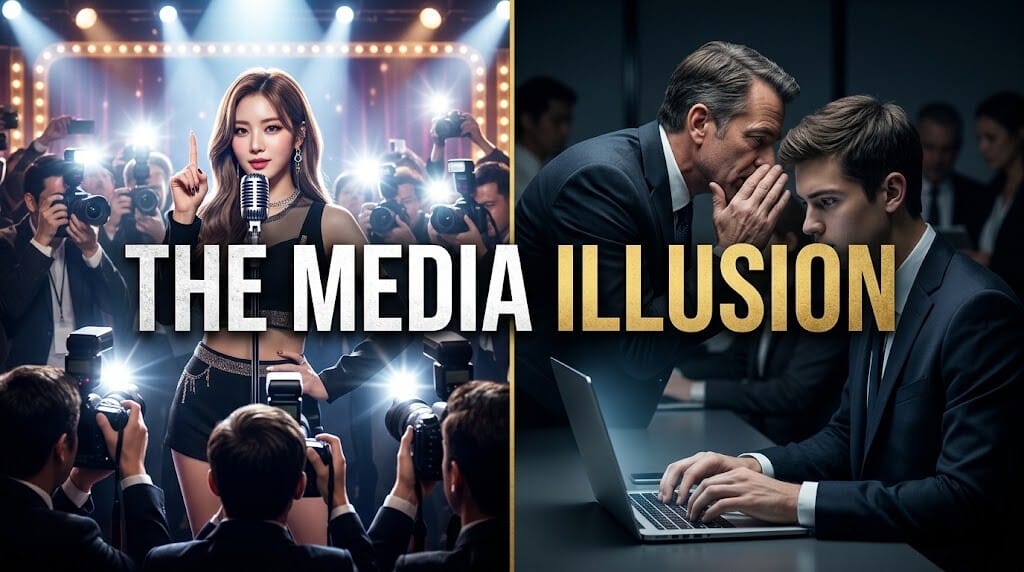
The entertainment industry often presents a facade of spontaneous, breaking news. When a highly anticipated K-pop idol group announces a comeback, or a massive scandal is suddenly resolved with a perfectly timed apology, fans consume the information as if it flowed naturally from the source to the journalist, and finally to the public. However, the reality of entertainment journalism is far from organic. Beneath the surface of exclusive interviews and flashy comeback showcases lies a meticulously engineered ecosystem of press control and media marketing. This environment operates on a complex set of unwritten rules, transactional relationships, and strict boundaries dictated by entertainment agencies seeking to protect their multi-million-dollar intellectual properties.
At the heart of this ecosystem is a constant, invisible power tug-of-war between the entertainment companies and the media outlets. While journalists strive for clicks, breaking news, and unfiltered access, agencies demand absolute narrative control, utilizing tools ranging from strict information embargoes to highly orchestrated press conferences. The balance of power shifts constantly depending on the size of the agency, the popularity of the artist, and the influence of the media outlet involved. Understanding this dynamic is crucial for dissecting how modern pop culture narratives are manufactured, distributed, and occasionally, how they spectacularly unravel.
The Strategic Function of the Press Embargo
In the realm of entertainment journalism, information is currency, and timing is everything. The press embargo is one of the most powerful tools an agency possesses to manipulate both the media and the public. An embargo is a formal agreement where a PR team provides journalists with advance information—such as a new album release, a casting announcement, or a corporate merger—on the strict condition that it cannot be published until a specific date and time.
Building Anticipation Through Synchronized Silence
For marketing teams, the embargo is a weapon of mass synchronization. When a top-tier agency prepares for a major artist’s comeback, they want to dominate the digital landscape entirely. By issuing press releases to dozens of media outlets under an embargo, the agency ensures that at the exact moment the clock strikes midnight (or the designated release time), the internet is instantly flooded with identical headlines. This synchronized burst of news triggers social media algorithms, pushing the topic to the top of worldwide trending lists on platforms like X (formerly Twitter) and dominating search engine queries.
This strategy prevents the narrative from leaking out slowly, which would dilute the impact. It forces media outlets into compliance; breaking the embargo means risking the wrath of the agency and being cut off from future press releases. The resulting echo chamber gives the illusion of a monumental, unavoidable cultural event, all orchestrated through controlled silence.
Mitigating Crisis and Controlling the Narrative
Embargoes are not merely used for promotional marketing; they are critical in crisis management. When an agency anticipates a negative story breaking—such as a contract dispute or a dating rumor—they may issue an embargoed statement outlining their official stance. This allows journalists to write their stories in advance, heavily relying on the agency’s provided context and framing. By feeding the media the defense before the prosecution has even spoken, the agency softens the blow of the initial shock. The media, eager to hit “publish” the second the embargo lifts, often sacrifices investigative depth for speed, inadvertently becoming mouthpieces for the agency’s crisis PR team.
Showcase Press Conferences: A Highly Orchestrated Illusion
The album release showcase or drama premiere press conference is the most visible battleground in the entertainment media ecosystem. To the public, these events look like open forums where journalists can freely interrogate stars. In reality, they are tightly controlled theatrical performances designed to project an image of transparency while revealing absolutely nothing of substance.
The Anatomy of a Curated Media Event
A modern press showcase is engineered down to the second. Agencies select the venue, control the lighting, and manage the guest list with extreme prejudice. Only pre-approved media outlets are invited, effectively filtering out rogue journalists known for asking uncomfortable questions. The event usually begins with a flawless performance or a highly edited highlight reel, setting a positive, celebratory tone.
The subsequent Q&A session is where the true press control manifests. The MC, almost always a veteran entertainer hired by the agency, acts as a human shield for the artists. Their job is to keep the energy light, redirect awkward inquiries, and manage the clock. Journalists are often subtly, or sometimes overtly, instructed on which topics are strictly off-limits. If an artist has recently been involved in a controversy, the PR team will explicitly ban questions related to the incident, framing the restriction as a “focus on the art.”
Pre-Screened Questions and the Blacklist Threat
In many high-stakes showcases, the spontaneity is entirely fake. PR teams frequently request journalists to submit their questions days in advance. These questions are screened, edited, and then rehearsed by the artists, ensuring that no one is caught off guard. When a journalist takes the microphone during the event, they are merely playing their part in a scripted dialogue.
What happens if a reporter goes off-script and asks a banned, hard-hitting question? The consequences are immediate and severe. The MC will abruptly cut them off, the artist will be instructed not to answer, and the PR team will intervene. More importantly, that journalist—and often their entire publication—will be quietly added to the agency’s blacklist. This means no more interview access, no VIP showcase passes, and no advance press releases. In an industry where speed and access generate revenue, being blacklisted by a major agency like HYBE, SM, or YG can severely damage a media outlet’s bottom line.
The Invisible Power Tug-of-War
The relationship between agencies and the press is often described as symbiotic, but it is better understood as a continuous cold war. Both sides need each other to survive, but they are constantly maneuvering to gain the upper hand.
When the Agency Holds the Cards (Big 4 vs Media)
When dealing with industry giants, the power dynamic is heavily skewed in favor of the entertainment companies. A top-tier agency holding the contracts of globally recognized superstars does not need traditional domestic media to the extent they did a decade ago. With the rise of proprietary fan platforms (like Weverse), official YouTube channels, and direct-to-consumer social media broadcasting, agencies can bypass journalists entirely and deliver news straight to the fandom.
This leverage allows mega-agencies to dictate terms to the press. They can demand favorable coverage, dictate headline phrasing, and enforce strict embargoes with absolute authority. Mid-sized or smaller news outlets have no choice but to comply, as losing access to the biggest stars means losing the massive influx of fan traffic that sustains their ad revenue.
The Media’s Counterattack: Paparazzi and Exclusives
However, the media is not entirely powerless. While agencies control official communications, journalists control the shadows. Independent entertainment dispatch outlets and paparazzi act as the ultimate counter-balance to corporate press control. By conducting deep-cover investigative journalism, securing leaked documents, and photographing stars in their private time, these outlets bypass the agency’s PR machinery entirely.
When a major media outlet secures an exclusive, undeniable piece of investigative journalism—such as concrete evidence of a scandal or a secret relationship—the power dynamic flips instantly. The agency is forced onto the defensive, scrambling to negotiate with the publication. Sometimes, these negotiations happen behind closed doors before the story is published, leading to rumors of “kill fees” or traded favors, where an agency might offer an exclusive interview with a different star in exchange for burying a damaging story. This hidden horse-trading is the ultimate manifestation of the power tug-of-war, proving that while agencies construct the narrative, the press still holds the power to tear it down.
Writer’s Opinion
Honestly, when you really look at how heavily engineered all these press releases and showcases are, it makes you wonder—are we ever actually getting the truth? I mean, journalists sitting in a room just typing up the exact narrative an agency spoon-feeds them… isn’t it kind of wild? It feels less like journalism and more like a highly paid corporate stenography service sometimes. But then again, without this intense, almost aggressive control over the narrative, would these entertainment empires even survive the chaos of internet culture? It’s a bit scary to think about how easily public perception is manipulated, right? You have to wonder who really wins in this invisible tug-of-war… the agency, the media, or just the algorithms feeding off the drama?