
The global music industry has undergone a massive paradigm shift over the past decade, transforming from an ecosystem reliant on physical album sales to one entirely anchored by live touring and digital streaming. At the forefront of this revolution is K-pop, an undeniable cultural juggernaut that has redefined the scale, production value, and profitability of international stadium tours. For entertainment conglomerates managing today’s biggest groups, world tours are no longer just promotional vehicles; they are the primary engines of revenue generation. However, the business of crossing borders with a massive crew, monumental stage sets, and high-tech audiovisual equipment has never been more complicated. The concept of “Tournomics”—the intricate economic ecosystem surrounding global concert tours—is now deeply intertwined with macroeconomic variables that artists and their management agencies cannot control.
Today, plotting a K-pop world tour is less about tracing the highest concentrations of streaming listeners and more about navigating a volatile minefield of global geopolitics. War, fluctuating currency exchange rates, and relentless global inflation are aggressively dictating where artists can perform, how much tickets must cost, and whether a sold-out stadium actually translates to a profitable endeavor. An agency might sell out a massive arena in South America or Eastern Europe, but if the local currency plummets against the US Dollar before the profits are repatriated, the tour could operate at a staggering loss. In this complex reality, tour routing has become an exercise in high-stakes risk management, requiring financial analysts and geopolitical strategists just as much as choreographers and stage directors.
Decoding “Tournomics”: The Business of Global Stages
From Streaming Metrics to Stadium Yields
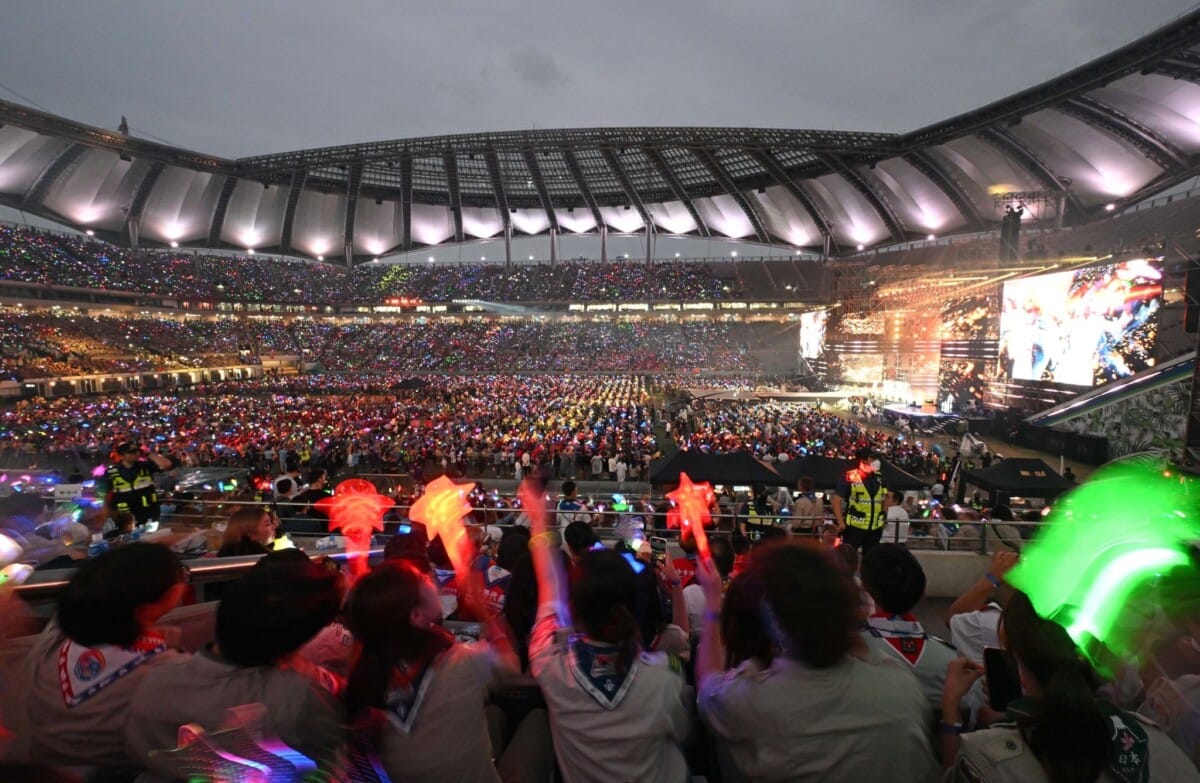
In the modern music landscape, digital streaming pays fractions of a cent per play, making it incredibly difficult to sustain a massive entertainment company on recorded music alone. Live touring is the undisputed financial backbone of the industry. K-pop groups, in particular, rely heavily on live performances because they drive secondary revenue streams, such as the sale of high-margin merchandise (like exclusive apparel and specialized light sticks) and VIP fan experiences. A successful world tour can generate tens of millions of dollars in a matter of weeks. However, maximizing stadium yields requires precise strategic planning. Every empty seat, every unsold t-shirt, and every inefficient travel route actively damages the overall gross profit.
The Fragile Math of International Live Production
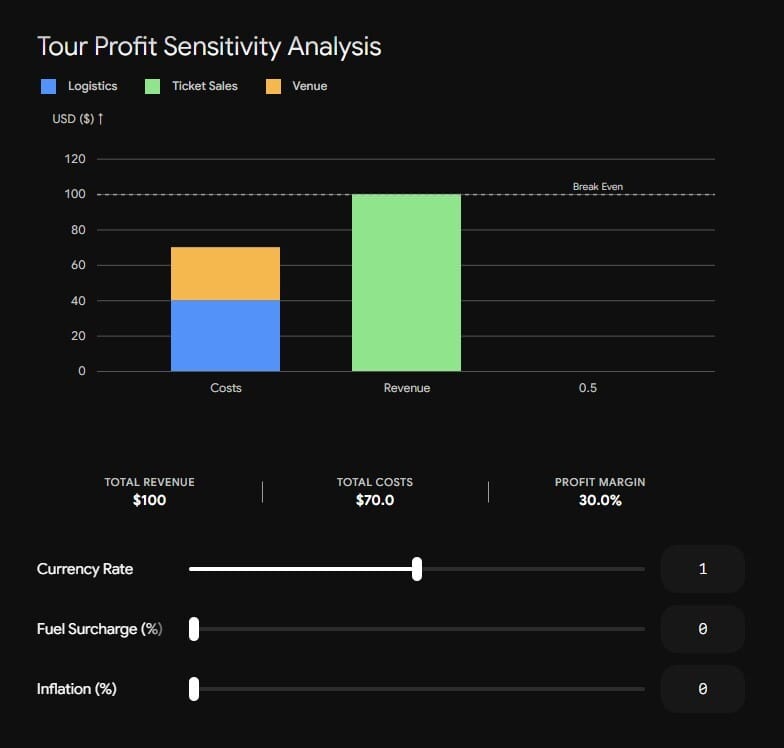
Unlike domestic concerts, global tours require an astronomical upfront capital investment. A standard K-pop production involves transporting dozens of performers, backup dancers, makeup artists, security personnel, and technical directors across multiple time zones. Beyond human capital, the physical logistics are staggering. Custom stage pieces, elaborate lighting rigs, and specialized pyrotechnics must be shipped via maritime freight or cargo planes months in advance. The profit margin on these tours is surprisingly fragile. If logistical costs rise unexpectedly, or if a venue fee is miscalculated, a tour that grosses millions on paper can end up losing money in reality. The math requires a delicate balance of maximizing ticket volume while ruthlessly compressing overhead costs.
The Geopolitical Fault Lines: How War Redraws Flight Paths
Airspace Closures and Skyrocketing Freight Costs
Geopolitics and active military conflicts have a direct, catastrophic impact on concert routing. The most prominent example is the closure of Russian airspace due to the ongoing war in Ukraine. Historically, flights from Seoul or Tokyo to major European cities utilized trans-Siberian routes. With this airspace restricted, commercial and cargo planes are forced into massive detours, adding three to four hours to the flight time. This drastically increases aviation fuel consumption, which airlines pass down to the touring agencies via hefty freight surcharges. When moving hundreds of tons of equipment, these surcharges can inflate the European leg of a world tour by millions of dollars, fundamentally altering the cost-benefit analysis of visiting cities like London, Paris, or Berlin.
Sanctions and Excluded Regional Markets
Beyond physical flight paths, geopolitical instability shrinks the map of viable concert markets. Regions experiencing political unrest, heavy economic sanctions, or civil war are immediately blacklisted by risk-averse entertainment agencies. The Middle East and Eastern Europe, once seen as rapidly growing emerging markets for K-pop, are frequently skipped or heavily restricted in modern tour routing. Agencies simply cannot justify the security risks to their artists and crew, nor can they navigate the complex insurance liabilities associated with performing in unstable zones. Consequently, global tours are becoming increasingly concentrated in geopolitically stable, allied nations, effectively freezing millions of willing fans out of the live music experience.
Foreign Exchange Volatility: The Invisible Margin Killer
Strong Dollar, Weak Local Currencies
One of the most silent yet devastating threats to global tour profitability is foreign exchange (FX) volatility. Entertainment agencies in South Korea operate and report earnings in Korean Won (KRW). However, the global logistics industry—including aircraft charters, international freight, and high-end hotel chains—predominantly operates in US Dollars (USD). When a K-pop group tours in Latin America or Southeast Asia, tickets are sold in the local currency (e.g., the Mexican Peso, the Brazilian Real, or the Thai Baht). If the US Dollar is unusually strong, the local currency collected from ticket sales loses immense value when converted back to USD to pay operational debts, and subsequently back to KRW for corporate revenue. A 10% depreciation in a local currency can wipe out the entire profit margin of a regional tour leg.
Hedging Strategies and Dynamic Ticket Pricing
To combat currency risks, entertainment companies are increasingly behaving like Wall Street hedge funds. Agencies employ financial analysts to execute forward contracts and currency hedging strategies, attempting to lock in favorable exchange rates months before a tour begins. Additionally, this volatility has accelerated the adoption of dynamic ticket pricing. By algorithmically adjusting ticket prices based on real-time demand and macroeconomic shifts, agencies attempt to offset potential currency devaluations. If a local currency weakens significantly during the ticket sale period, the face value of remaining tickets is quietly adjusted upwards, shifting the financial burden directly onto the international fan base.
Global Inflation: Squeezing the Live Music Ecosystem
Rising Overhead: Venues, Fuel, and Production
The post-pandemic global economy has been defined by stubborn inflation, which has mercilessly squeezed the live entertainment sector. Every single component of a live concert has become vastly more expensive. The cost of raw materials like steel and wood for stage construction has skyrocketed. Venue rental fees have surged as stadiums attempt to recoup their own inflated operating costs. Furthermore, local labor wages for security personnel, stagehands, and technicians have increased significantly to match the rising cost of living. Because an agency cannot easily compromise on the visual spectacle of a K-pop concert—which fans have come to expect—these inflated production costs must be absorbed into the tour’s overarching budget.
The Consumer Price Squeeze: Pushing Fans to the Limit
In economics, this phenomenon is often referred to as “funflation.” To maintain their profit margins amidst rising operational and geopolitical costs, agencies have no choice but to pass the expense onto the consumer. Over the last five years, the average price of a premium K-pop concert ticket has soared, often surpassing the $300 to $500 mark for standard floor access, with VIP packages pushing well past $1,000. However, there is a hard ceiling to consumer purchasing power. As global inflation also impacts the fans’ daily lives—increasing their rent, groceries, and travel expenses—agencies are walking a dangerous tightrope. Price out the fans entirely, and you risk playing to half-empty stadiums, which is the ultimate disaster in the world of Tournomics.
Strategic Rerouting: How K-Pop Agencies Adapt to the Chaos
The Pivot to High-Yield Megacities
In response to these crushing macroeconomic pressures, agencies are fundamentally redrawing the global tour map. The era of sprawling, 30-city global tours that visited secondary and tertiary markets is fading. Instead, agencies are pivoting to a “hub” strategy, focusing exclusively on high-yield, low-risk megacities like Los Angeles, Tokyo, London, and Singapore. These cities boast strong currencies, world-class infrastructure, and immense local purchasing power. By concentrating performances in these financial capitals, agencies minimize complex border crossings, reduce freight mileage, and guarantee premium ticket yields, insulating themselves from broader geopolitical instability.
Multi-Night Residencies vs. Multi-City Sprints
Coupled with the pivot to megacities is the shift from the traditional “multi-city sprint” to the “multi-night residency” model. Rather than packing up a massive stadium stage and moving it 500 miles down the road every two days, artists are simply staying put. A group will book a stadium in a hub city and perform for three to four consecutive nights. This drastically slashes the largest expenses of touring: freight transportation, crew travel, and stage tear-down labor. Instead of the artist traveling to the fans, the fans are now forced to travel to the artist. This effectively shifts the macroeconomic burden of inflation and travel logistics away from the entertainment agency and directly onto the shoulders of the consumer.
Writer’s Opinion
Honestly, looking at all these moving parts makes my head spin a little bit—like, how do they even pull this off without going bankrupt? We just see the flashy stage, the perfectly synchronized dancing, and our glowing light sticks, but behind the scenes, it’s this chaotic chessboard of currency hedging, restricted airspaces, and praying inflation doesn’t eat the profit margin. It really makes you wonder if these massive, globe-trotting tours are even going to be sustainable in five years… right? The sheer math of moving a 100-person crew across borders while dodging geopolitical landmines is just wild!