In an era where streaming platforms dictate music consumption and nearly every piece of merchandise can be ordered with a single click, it might seem counterintuitive for entertainment companies to invest heavily in physical retail spaces. Yet, across Seoul, Tokyo, Los Angeles, and beyond, fans are willingly waiting in line for hours—sometimes overnight—just to step inside a temporary room. The K-pop industry is not moving away from the physical world; it is aggressively doubling down on it. This phenomenon represents a massive evolution from simple merchandise booths to highly immersive, meticulously designed pop-up stores that serve as the ultimate spatial marketing strategy.
These temporary retail environments have become critical battlegrounds for K-pop agencies looking to monetize global fandoms and deepen emotional engagement. A modern K-pop pop-up store is no longer just a place to buy a t-shirt or a physical album. It is a highly curated, multi-sensory theme park compressed into a few hundred square feet. By transforming a group’s latest album concept into a tangible, explorable reality, agencies are successfully opening the wallets of fans who crave physical connection in an increasingly digital landscape.
The Psychology of FOMO and Exclusivity
At the core of the pop-up store strategy is the powerful psychological trigger of FOMO, or the “Fear Of Missing Out.” Because these stores are strictly temporary—often lasting only a week or two—they create an intense sense of urgency.
Gamifying the Shopping Experience
K-pop agencies understand that fans are not just buying products; they are buying an experience. To maximize this, pop-up stores heavily gamify the act of shopping. Fans aren’t just picking items off a shelf. They are participating in digital lucky draws, completing stamp rally missions across the store to win exclusive photocards, and trading items with other fans on the spot. This transforms a simple financial transaction into an exciting, community-driven event. The limited-edition merchandise sold exclusively at these physical locations often becomes a badge of honor within the fandom, driving immediate sales and massive organic social media buzz.
Designing the Ultimate Fan Immersion
To justify the long wait times and premium prices, the spatial design of a K-pop pop-up store must be flawless. It is an exercise in bringing a music video directly into the real world.
The Power of “Instagrammable” Photo Zones
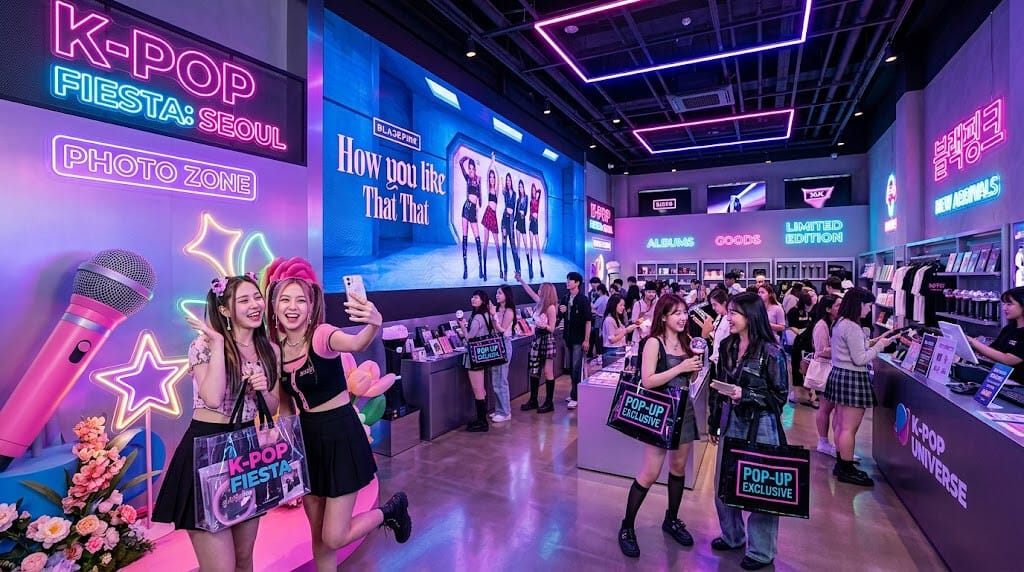
The most critical architectural element of any pop-up space is the photo zone. These areas are meticulously lit and designed specifically for fans to take photos and instantly upload them to Instagram, TikTok, or X. By stepping into a replica of the artist’s music video set, fans become the main characters of the narrative. This user-generated content acts as free, highly effective global marketing. When an international fan sees their favorite influencer or online friend posting from a gorgeous pop-up store in Seoul, the desire to experience it themselves skyrockets.
Multi-Sensory Brand Building
Beyond visuals, agencies are increasingly using multi-sensory marketing to solidify brand identity. A pop-up store might feature a custom scent specifically developed for the album, unreleased background music tracks playing softly on loop, and interactive media walls that respond to a fan’s movement. This level of immersion creates a deeply emotional memory that simple online shopping could never replicate, fostering long-term loyalty that translates into sustained revenue.
Global Expansion of the Pop-Up Strategy
What started as a hyper-local marketing tactic in neighborhoods like Seongsu-dong or Gangnam in Seoul has now become a required element of global K-pop tours. Agencies are now launching synchronized pop-up stores in cities like London, New York, and Manila alongside an artist’s concert dates. This spatial strategy allows the agency to capture revenue from fans who perhaps couldn’t secure a concert ticket but still want to feel connected to the “event” happening in their city. It is a brilliant way to expand the geographical footprint of the fandom’s spending power.
Writer’s Opinion
Wait, so people are literally camping out overnight just to buy things they could technically find online a few weeks later? Honestly, when I first heard about these massive lines for K-pop pop-up stores, I thought it was completely absurd. Like, why put yourself through that physical exhaustion?! But then I actually visited one. And wow, the moment you walk through those doors and hear the music, smell the custom scent, and see everyone so genuinely excited… you instantly get it. It’s not about the merchandise at all, is it? It’s about feeling like you belong to a physical community in a world that forces us to live our lives behind glowing screens. Isn’t it just amazing how these companies figured out that the ultimate luxury in the digital age is actually just a real-world experience?