
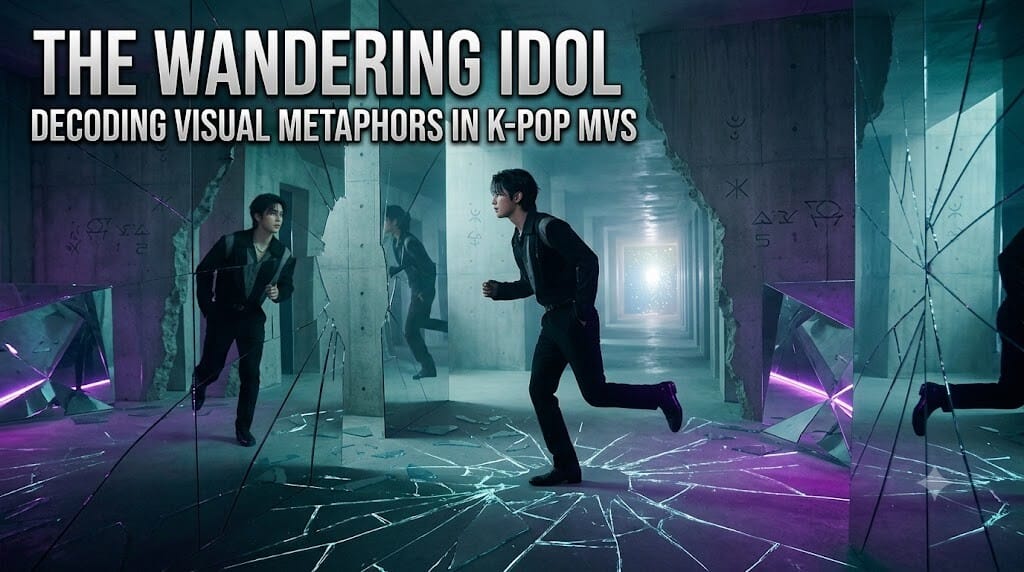
K-pop music videos have transcended the traditional boundaries of promotional clips, evolving into highly compressed, visually stunning short films. Beyond the synchronized choreography and cutting-edge fashion, these visual masterpieces are laden with complex symbolic props, recurring motifs, and enigmatic characters. Viewers are often mesmerized by the sight of their favorite artists perpetually in transit—running through endless corridors, gazing into shattered mirrors, or searching for an unseen exit. This visual richness doesn’t merely serve an aesthetic purpose; it constructs profound metaphors that carry significant emotional and ideological weight, inviting audiences worldwide to look closer and dig deeper into the narrative.
This persistent trope of the wandering idol is far from accidental. Creative directors and production teams meticulously employ metaphor to bridge the gap between a highly manufactured celebrity image and the audience’s innate desire for genuine narrative depth. By embedding cryptic symbols and sprawling lore into the mise-en-scène, K-pop MVs transform passive viewing into an active practice of interpretation. Watching an idol navigate a dreamlike, dystopian, or fragmented universe is to witness a staged philosophy of identity, desire, and control, sparking endless theories and discussions among dedicated global fandoms.
The Hermeneutics of K-Pop: Decoding Visual Metaphors
Why Metaphor Matters in K-Pop Music Videos
Metaphors serve as powerful semiotic shortcuts in K-pop music videos, condensing complex psychological and societal concepts into accessible visual tokens. For production companies and artists, these symbolic elements provide a safe yet profound way to address heavy themes—such as the pressures of fame, the surveillance of the public eye, commodification, and the exhaustion of emotional labor—without relying on heavy-handed exposition. In the fast-paced realm of K-pop, where a song lasts merely three minutes, visual metaphors instantly anchor the viewer’s emotions. By utilizing these visual cues, K-pop transcends language barriers, allowing international fans to resonate with the underlying messages.
Common Symbols and Their Emotional Weight
Within these meticulously crafted videos, certain objects repeatedly operate as emotional anchors. A cracked or infinite mirror frequently signals a fragmented selfhood or the duality of an idol’s public persona versus their private reality. Endless, labyrinthine corridors evoke a sense of confinement, repetition, and the grueling cycle of the entertainment industry. Meanwhile, imagery involving birds, butterflies, or breaking out of glass boxes universally symbolizes the yearning for liberation and authentic self-expression. These recurring visual anchors not only heighten the emotional stakes of a single video but also provide a consistent motif that can be recontextualized across multiple “comebacks.”
The Wandering Idol: Navigating the K-Pop Universe
Liminality and the Search for True Identity
Why are idols so frequently depicted as wanderers? In the context of K-pop hermeneutics, idols often function as liminal figures—they exist in an in-between state, neither fully passive objects nor completely autonomous subjects. Their wandering gestures vividly articulate this complex status. When an idol is shown wandering through a deserted cityscape, a mystical forest, or an abstract void, it visually stages their ambivalence. This perpetual motion becomes a poignant metaphor for the tension between personal desire and structural industry constraints. They are searching for their true identity within a universe that has been artificially constructed for them.
Worldbuilding and Serialized Storytelling Lore
This wandering is deeply tied to the trend of expansive worldbuilding in the industry. Many K-pop groups cultivate an ongoing “universe” or overarching storyline that spans across multiple albums, music videos, short films, and webtoons. This serialized approach to storytelling transforms each music video into a distinct chapter of a much larger narrative. The recurring metaphors act as the foundational grammatical rules of this specific universe. As idols wander through these interconnected dimensions, they map out the lore, guiding fans through a serialized mythology that keeps the audience deeply invested long after the promotional cycle ends.
Fan Labor: Meaning-Making as a Community Practice
The Participatory Culture of K-Pop Fandoms
The hermeneutics of K-pop—the active interpretation of its texts and symbols—is largely driven by intense fan labor. Decoding these intricate metaphors has become a central pillar of the K-pop community experience. Whenever a highly anticipated music video drops, fandoms immediately mobilize. Discussion threads on social media, exhaustive video essays on YouTube, and detailed fan art all serve to extend, debate, and reshape the original meanings intended by the creators.
Co-Constructing the Idol Universe
This participatory culture transforms K-pop music videos from static pieces of media into dynamic, communal projects. The landscape through which the idol “wanders” is co-constructed by the agency’s creative team and the boundless imagination of the fans. The theories generated by the audience often become so popular that companies may subtly acknowledge or integrate them into future releases, creating a thrilling, collaborative feedback loop of meaning-making.
Conclusion: The Lasting Impact of Symbolic Storytelling
Ultimately, the K-pop industry utilizes metaphor as a sophisticated cultural toolkit to seamlessly negotiate the demands of visual spectacle, commercial marketability, and profound narrative depth. The recurring trope of the wandering idol is far more than an aesthetic device; it is a compelling social commentary that dramatizes the modern contradictions of celebrity life, personal identity, and globalized media. By continuously inviting viewers into these rich, symbolic worlds—universes designed to be decoded, fiercely debated, and endlessly reimagined—K-pop ensures its relevance and longevity. Idols wander because the journey of interpretation is precisely what transforms casual listeners into lifelong, dedicated fans.
Writer’s Opinion: Beyond the Spectacle
Writing this piece reminded me of exactly why I first fell down the K-pop rabbit hole. It is incredibly easy for outside critics to dismiss idol culture as nothing more than a highly manufactured, superficial industry focused solely on profit. However, once you start peeling back the layers of these music videos, you quickly realize the sheer amount of creative genius and intentionality involved in their production.