The democratization of music discovery through short-form video platforms like TikTok, Instagram Reels, and YouTube Shorts has completely disrupted the traditional K-pop industry model over the past few years. Historically, the Korean music market was fiercely dominated by the “Big 4” entertainment conglomerates (HYBE, SM, JYP, and YG). With their massive marketing budgets, established global PR machinery, and monopolistic grip on broadcast television, these giants made it nearly impossible for independent or small-agency idol groups to break through the noise. However, the rise of the short-form algorithm suddenly created a seismic shift—a loophole where a catchy audio snippet from a virtually unknown group could bypass traditional gatekeepers and reach tens of millions of global listeners overnight.
The viral explosion of FIFTY FIFTY’s “Cupid” in 2023 served as the ultimate proof-of-concept for this algorithmic phenomenon, often dubbed the “small agency miracle.” Produced by a relatively obscure label (ATTRAKT), the track utilized a sped-up version that perfectly aligned with TikTok’s audio trends, propelling the group onto the Billboard Hot 100 without a massive traditional marketing campaign. However, as the digital landscape rapidly evolves, a pressing question emerges: as major entertainment conglomerates adapt, saturate short-form platforms with infinite capital, and optimize their own algorithmic strategies, is this “miracle” still genuinely possible for under-resourced agencies today?
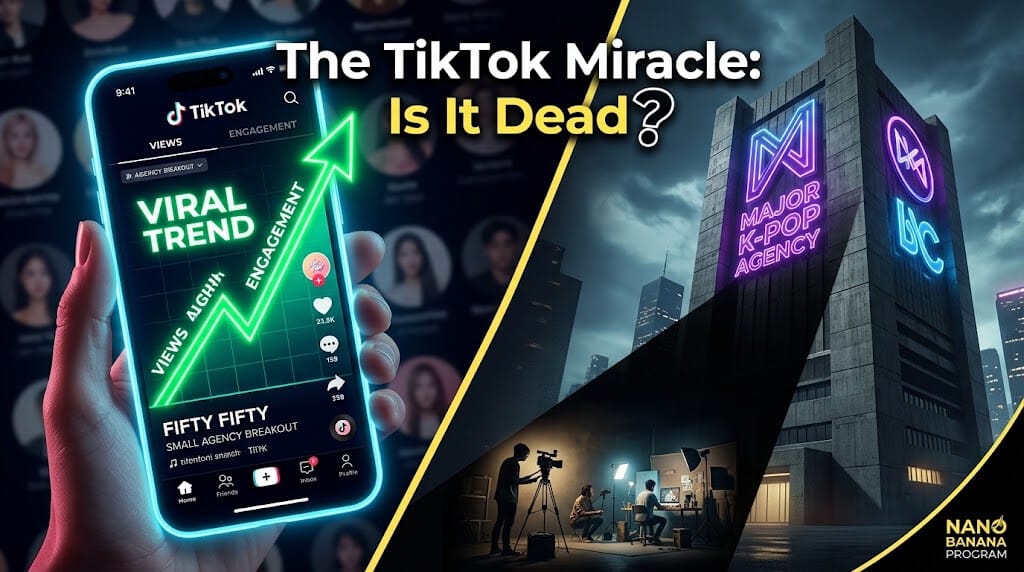
The Anatomy of a TikTok Miracle: How FIFTY FIFTY Rewrote the Playbook
To understand if the small agency miracle can be replicated, we first need to dissect exactly how it happened. FIFTY FIFTY did not succeed because they outspent the Big 4; they succeeded because their content perfectly synchronized with the behavioral mechanics of the TikTok algorithm.
The Power of Sped-Up Audio and Bypassing Gatekeepers
The catalyst for “Cupid” wasn’t a multi-million-dollar music video or a highly choreographed dance challenge. It was a user-generated “sped-up” (Twin Version) audio track. On TikTok, high-tempo, easily digestible audio snippets thrive because they match the rapid scrolling behavior of modern consumers. By releasing an English version of the song and allowing the TikTok community to remix and speed it up, the agency inadvertently tapped into a global trend. The audio became a ubiquitous background track for makeup tutorials, daily vlogs, and meme videos.
This audio-centric virality completely bypassed the traditional K-pop gatekeepers. The group didn’t need to win first place on Korean music broadcasting shows or secure expensive billboard advertisements in Times Square. The algorithm purely rewarded high user retention and audio reuse, proving that a great melody combined with user-generated momentum could organically chart a song globally.
The Big Agency Counteroffensive: Saturation and Algorithmic Capture
Unfortunately for small agencies, the Big 4 did not sit idly by and watch their market share get disrupted. Recognizing the sheer power of short-form video, major K-pop labels have since aggressively weaponized the TikTok algorithm, making it exceptionally difficult for small players to achieve organic reach today.
Industrialized Short-Form Content Creation
Today, major agencies do not treat TikTok as an afterthought; it is a heavily funded core pillar of their comeback strategies. Before a song is even released, agencies hire top-tier choreographers specifically to design a 15-second “point dance” that looks good in a vertical 9:16 aspect ratio. Furthermore, they utilize their vast networks to orchestrate massive “dance challenge” cross-promotions. A new group from HYBE, for example, will naturally film TikTok challenges with established superstars from BTS, SEVENTEEN, or LE SSERAFIM.
This creates an insurmountable network effect. When ten different mega-stars with millions of followers participate in a new song’s dance challenge, they artificially inject the audio into the algorithm’s mainstream feed. Small agencies simply do not have the network or the capital to manufacture this level of initial momentum.
Algorithmic Fatigue and Shorter Trend Lifespans
As a result of this industrialized push by major labels, short-form platforms have become intensely saturated with K-pop content. Users are experiencing “challenge fatigue.” Because a new dance challenge goes viral every three days, the lifespan of a viral hit has plummeted. For a small agency, even if they miraculously trigger the algorithm, the window of opportunity to monetize that virality before the trend dies is now brutally short.
Beyond the One-Hit Wonder: The Sustainability Crisis
The hardest truth about the TikTok algorithm is that it is incredibly effective at promoting a song, but remarkably poor at promoting an artist.
Converting Casual Listeners into Core Fandoms
This is the exact trap that the small agency miracle often falls into. Millions of people might use your sped-up song in their TikTok videos, but how many of those users actually know the names of the group members? How many will buy a physical album, stream the B-sides, or purchase concert tickets?
K-pop’s massive profitability relies on a “core fandom”—a highly dedicated, financially invested group of fans. TikTok, however, breeds a “casual listener” audience. Users passively consume the audio without feeling any emotional connection to the creators. Small agencies often lack the capital required to immediately follow up a viral hit with high-quality variety content, behind-the-scenes vlogs, and aggressive PR required to convert those fleeting viewers into a loyal, paying fandom. This is why algorithmic success often results in a “one-hit wonder” rather than a sustainable career.
Can Small Agencies Still Win in the Current Landscape?
So, is the dream completely dead? Not necessarily, but the strategy must drastically evolve. Relying purely on luck and hoping a random dance challenge goes viral is no longer a viable business model.
Hyper-Niche Targeting vs. Mass Appeal
Instead of trying to compete with the Big 4 for mainstream pop supremacy, small agencies must pivot to hyper-niche targeting. The algorithm is incredibly adept at finding specific micro-communities—whether that is an underground R&B fandom, alternative rock enthusiasts, or specific regional demographics (e.g., targeting a Latin American audience with Spanish-infused tracks). By producing highly distinct, genre-specific music that the major labels deem too risky, small agencies can cultivate a fiercely loyal, albeit smaller, global fanbase. The algorithm will still reward uniqueness, provided the content offers something that the saturated mainstream market currently lacks.
Writer’s Opinion
Wait, so does this mean the golden era of the “underdog going viral” is basically over already?! Honestly, looking at how fast the giant K-pop corporations completely monopolized TikTok challenges, it kind of feels a bit depressing, right? I mean, what started as this raw, fun, unpredictable platform for discovering hidden gems has basically just turned into another heavily funded marketing billboard for the Big 4! But still, human creativity is wild… algorithms are literally just math, and if there’s one thing I know about music fans, it’s that they love to rebel against what they are supposed to like. Maybe the next small agency miracle won’t be a dance challenge or a sped-up song at all—maybe it’ll be something totally raw and unpolished that completely breaks the rules again? I genuinely hope so!