The global music phenomenon, particularly within the pop and K-pop idol industries, is a spectacle of flawless performances, dazzling visuals, and boundless charisma. However, beneath the glittering surface of perfect choreography and carefully curated public personas lies a growing crisis that demands our immediate attention. In today’s hyper-connected world, idols are facing unprecedented psychological pressure. The intersection of relentless social media scrutiny and astronomically high fandom expectations has created a highly toxic environment where simply being human is often viewed as a fatal flaw.
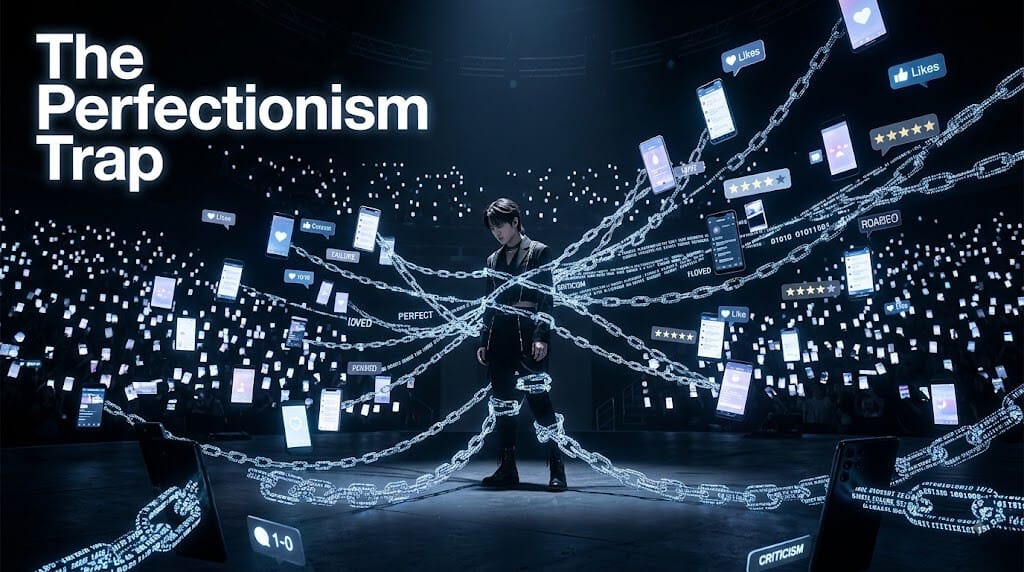
This relentless pursuit of an unattainable ideal is commonly referred to as the perfectionism trap. For modern artists, the stage no longer ends when the concert lights go down; it extends into their living rooms, their private moments, and their digital footprints. As fans demand 24/7 access and absolute moral and professional purity, the mental health of these young performers is taking a devastating hit. It is crucial to deeply examine how the digital era has amplified this psychological burden and what it truly means for the artists who find themselves trapped behind the glowing screen of social media.
The Rise of Social Media and the 24/7 Idol
The landscape of celebrity has fundamentally shifted over the last decade. In the past, artists could step out of the spotlight when they weren’t actively promoting a project. Today, the spotlight is permanent.
Constant Surveillance and Loss of Privacy
Social media platforms like Instagram, X (formerly Twitter), TikTok, and specialized fan communication apps have blurred the lines between public and private life. Idols are encouraged, and often contractually obligated, to share constant updates about their daily routines. While this builds a strong parasocial relationship with fans, it also subjects the artists to continuous surveillance. Every word, facial expression, and outfit choice is micro-analyzed by millions in real-time. This lack of a psychological safe haven leaves idols in a constant state of hyper-vigilance, unable to truly relax or disconnect from their “product” persona.
The Illusion of Flawlessness
Social media is inherently a highlight reel, but for idols, it functions as a strict resume of perfection. The algorithmic algorithms favor visually flawless, highly engaging content. Artists are pressured to maintain strict diets, undergo extreme physical conditioning, and present a perpetually cheerful demeanor. The perfectionism trap is sprung when idols begin to internalize these curated digital personas, feeling a deep sense of failure if they fall short of the flawless avatars they present online. The gap between their authentic selves and their digital identities becomes a breeding ground for severe psychological distress.
Fandom Expectations: A Double-Edged Sword
Fandoms are the lifeblood of the music industry. They drive sales, break streaming records, and provide incredible emotional and financial support. However, this immense power comes with an equally immense sense of entitlement.
The Power of the Parasocial Bond
When fans invest time, money, and emotional energy into an idol, they often develop a deep, one-sided bond known as a parasocial relationship. This bond can be incredibly positive, fostering a sense of community and mutual growth. Many fans rally behind their favorite artists, advocating for better treatment from agencies and celebrating their artistic milestones. Yet, this high level of investment often leads fans to believe they have a direct stake in the idol’s personal life and career choices.
Toxic Demands and Cyberbullying
When an idol deviates from the fandom’s collective fantasy—whether by making a minor performance mistake, changing their artistic direction, or simply being caught dating—the backlash can be swift and merciless. High expectations quickly curdle into toxic demands. Cyberbullying, mass organized hate campaigns, and malicious rumors spread like wildfire across social media. For a young artist whose self-worth has been intrinsically tied to fan approval, this sudden withdrawal of love and aggressive criticism can trigger profound psychological trauma.
The Psychological Toll on Artists
The combination of the perfectionism trap, constant digital surveillance, and volatile fandom expectations creates a perfect storm for mental health crises within the industry.
Anxiety, Depression, and Burnout
The fear of making a mistake in front of millions fosters a chronic state of performance anxiety. Idols often report feeling overwhelmed by the pressure to constantly improve and exceed their previous achievements. This relentless grind, coupled with a lack of adequate sleep and personal time, frequently leads to severe burnout. In recent years, an alarming number of artists have had to take sudden hiatuses to address crippling panic disorders, severe depression, and extreme physical exhaustion.
The Stigma Around Mental Health
Despite the increasing number of artists speaking out, there remains a lingering stigma surrounding mental health in the highly competitive entertainment industry. Admitting to psychological struggles is sometimes still perceived as a sign of weakness or a lack of professional dedication. While some agencies are beginning to offer psychological support and counseling, the systemic issues—the very structure of how idols are marketed and consumed—remain largely unchanged. Until the industry and the fans normalize the human imperfections of these artists, the mental health crisis will continue to escalate.
Writer’s Opinion
Honestly, watching these young artists struggle so much lately makes me wonder… are we, as a society, expecting them to be literal robots? I mean, it’s just music and entertainment at the end of the day, right? Sometimes I look at how fast a fandom turns on an idol for the tiniest, most human mistake and think, isn’t it completely crazy how we demand absolute moral and physical perfection from people who are just in their early twenties? It feels like the industry and the fans have built this shiny, beautiful, glass cage for them, and then everyone gets mad when they finally admit they can’t breathe inside it… makes you really question what “supporting an artist” actually means.