K-pop has evolved from a local South Korean subculture into a massive global phenomenon that dictates international music, fashion, and cultural trends. As this dynamic industry has grown, fans, media, and industry insiders alike have categorized its rapid history into distinct eras known as “generations.” However, this categorization is not merely a strict chronological timeline based on debut years; it is a complex reflection of technological advancements, shifting consumer behaviors, and strategic business decisions made by entertainment agencies.
Understanding these generations requires looking far beyond the music itself. The transition from one generation to the next is heavily driven by a fundamental change in the marketing essence of the idol groups. By analyzing the core criteria that divide these eras—from the early pioneers of the late 1990s to the hyper-connected artists of the 5th generation today—we can uncover how K-pop agencies continuously reinvent their products to capture new audiences, establish fresh narratives, and dominate the fiercely competitive global market.
What Defines a K-Pop Generation? The Core Criteria
While there is no official governing body that declares a new K-pop generation, the transitions are universally recognized by fans and critics when a critical mass of shifts occurs in the industry. These shifts are typically defined by three main criteria.
Technological Advancements and Fandom Platforms
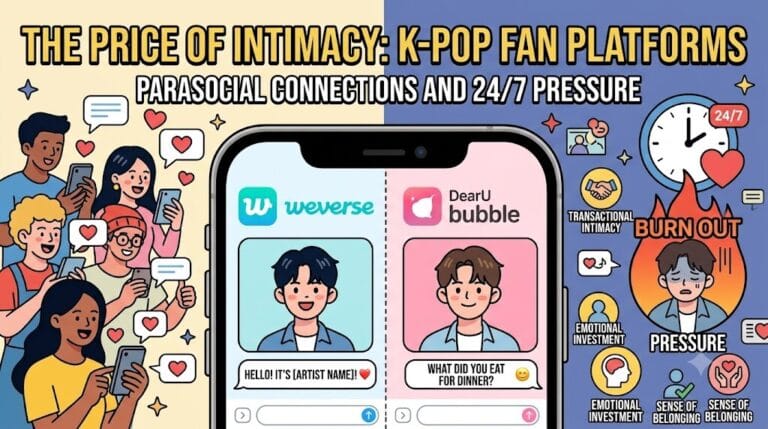
The medium through which fans consume content drastically shapes a generation. The shift from physical CDs and fanclub balloons to digital streaming, YouTube, and eventually dedicated fan-community apps (like Weverse or Bubble) dictates how idols are marketed. Each generation utilizes a new technological frontier to close the gap between the artist and the consumer.
Global Expansion Strategies
Early generations focused heavily on domestic success, occasionally branching out to Japan and China. Today, groups are formed with a global audience in mind from day one, often debuting with multinational members, English releases, and simultaneous global tours. The target market scale is a primary divider of eras.
Musical Styles and Core Concepts
Every generation reacts to the one before it. A generation heavily focused on intense, synchronized performances and complex universes (lore) will often be followed by a generation that pivots toward easy-listening tracks, relatable concepts, and casual aesthetics.
The Evolution of K-Pop: From 1st to 5th Generation
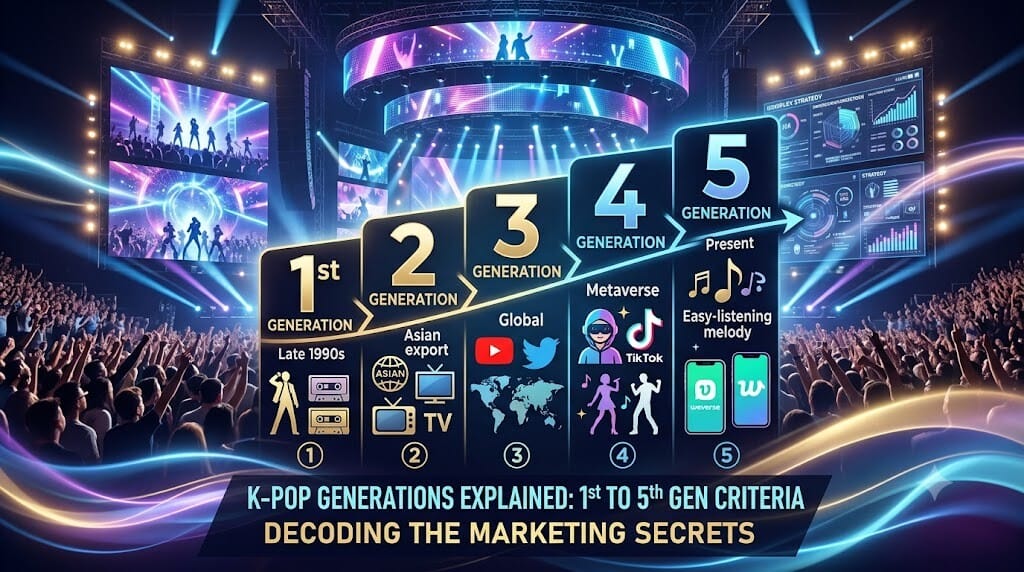
1st Generation (Late 1990s – Early 2000s): The Birth of the Idol System
The 1st generation, spearheaded by groups like H.O.T., Sechs Kies, S.E.S., and Fin.K.L, established the foundational “idol” blueprint. The marketing essence was rooted in mystique and perfection. Agencies created untouchable, almost god-like figures for teenagers to idolize. The primary medium was traditional broadcast television, and the marketing strategy was strictly domestic, aiming to create a youth culture rebellion against older, traditional Korean music.
2nd Generation (Mid 2000s – Early 2010s): The Golden Age and the Hallyu Wave
With groups like TVXQ, BIGBANG, Girls’ Generation, and Super Junior, the 2nd generation commercialized K-pop. The marketing essence shifted to approachability and the “Hallyu” (Korean Wave) export. Idols began appearing heavily on variety shows to showcase their personalities, becoming household names. Agencies started strategically targeting the broader Asian market, releasing localized albums in Japan and China.
3rd Generation (Mid 2010s – Late 2010s): Social Media and Global Domination
The 3rd generation, defined by titans like BTS, EXO, BLACKPINK, and TWICE, was revolutionized by smartphones and social media. The marketing essence became global connectivity and relatable storytelling. Instead of relying on traditional Korean broadcasters, agencies utilized YouTube, Twitter, and V Live to reach an international audience directly. High-production music videos and intricate, multi-album “universe” storylines were heavily marketed to build intensely dedicated global fandoms.
4th Generation (Early 2020s): Performance Focus and Pandemic Innovation
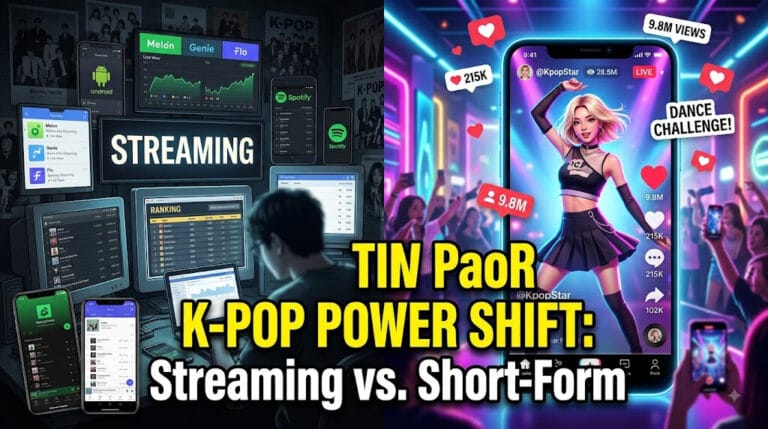
Groups like Stray Kids, TXT, aespa, ITZY, and NewJeans define the 4th generation. Emerging largely around the COVID-19 pandemic, their marketing essence centered on hyper-performance and digital expansion. Deprived of live concerts, agencies focused heavily on visually spectacular choreography tailored for TikTok dance challenges, metaverse concepts, and aggressive global chart targeting. The groups were marketed to Gen Z, focusing on self-love, unapologetic confidence, and striking visual aesthetics.
5th Generation (2023 – Present): Hyper-Connectivity and Easy Listening
Currently unfolding with groups like RIIZE, ZEROBASEONE, BOYNEXTDOOR, TWS, and ILLIT, the 5th generation is a distinct pivot. The marketing essence is moving toward easy-listening, casual authenticity, and hyper-personalization. Moving away from the heavy, aggressive lore of the 4th generation, 5th-gen marketing emphasizes a “boy/girl next door” vibe with tracks heavily influenced by Y2K nostalgia, easy-to-stream melodies, and highly active, conversational engagement on platforms like Weverse and TikTok.
The Marketing Essence: Why Do Agencies Push “Generation” Labels?
Ultimately, dividing K-pop into generations is a highly calculated marketing strategy orchestrated by the entertainment companies and the media.
- Bypassing Unbeatable Giants: When a new group debuts, it is impossible to compare them favorably to established giants like BTS or BLACKPINK. By declaring the start of a “new generation,” agencies create a clean slate. A rookie group doesn’t have to be the biggest group in the world; they just have to be the “leaders of the 5th generation.”
- Creating a Sense of Urgency and FOMO: Labeling an era creates a narrative of evolution. It signals to fans—especially younger fans who want a group to call their own from the very beginning—that a new cultural wave is starting. It drives the “Fear Of Missing Out,” encouraging rapid fandom growth.
- Brand Differentiation: Generational shifts allow agencies to pivot their business models. If the market is saturated with complex, dark concepts (late 4th gen), an agency will intentionally market their new group as bright, easy-listening, and “5th gen” to disrupt the market and stand out.
In conclusion, K-pop’s generational shifts are the heartbeat of its unprecedented global success. They are not simply a measure of time, but a masterful display of agile marketing. By constantly redefining what an idol is and how they connect with the world, the industry ensures that K-pop never feels stagnant, always offering a fresh, innovative experience for the next wave of global fans.